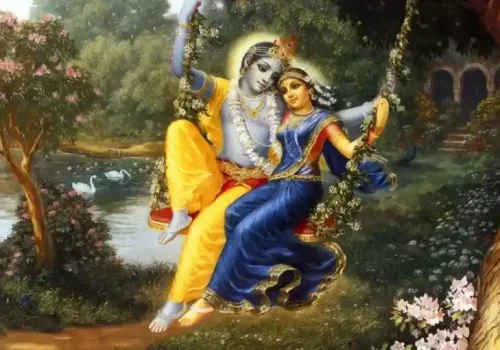
Radha Kripa Kataksh एक पवित्र स्तुति है जिसमें राधा रानी की करुणा और कृपा की याचना की जाती है। इस पाठ से भक्तजन के जीवन में भक्ति, प्रेम और दिव्य आनंद का संचार होता है। ऐसा माना जाता है कि Radha Kripa Kataksh का नियमित पाठ करने से राधा-कृष्ण की कृपा प्राप्त होती है और जीवन की कठिनाइयाँ सरल हो जाती हैं।
Radha Kirpa Kataksh| राधा कृपा कटाक्ष स्त्रोत्र
मुनीन्द्र–वृन्द–वन्दिते त्रिलोक–शोक–हारिणि
प्रसन्न-वक्त्र-पण्कजे निकुञ्ज-भू-विलासिनि
व्रजेन्द्र–भानु–नन्दिनि व्रजेन्द्र–सूनु–संगते
कदा करिष्यसीह मां कृपाकटाक्ष–भाजनम् ॥१॥
अशोक–वृक्ष–वल्लरी वितान–मण्डप–स्थिते
प्रवालबाल–पल्लव प्रभारुणांघ्रि–कोमले ।
वराभयस्फुरत्करे प्रभूतसम्पदालये
कदा करिष्यसीह मां कृपाकटाक्ष–भाजनम् ॥२॥
अनङ्ग-रण्ग मङ्गल-प्रसङ्ग-भङ्गुर-भ्रुवां
सविभ्रमं ससम्भ्रमं दृगन्त–बाणपातनैः ।
निरन्तरं वशीकृतप्रतीतनन्दनन्दने
कदा करिष्यसीह मां कृपाकटाक्ष–भाजनम् ॥३॥
तडित्–सुवर्ण–चम्पक –प्रदीप्त–गौर–विग्रहे
मुख–प्रभा–परास्त–कोटि–शारदेन्दुमण्डले ।
विचित्र-चित्र सञ्चरच्चकोर-शाव-लोचने
कदा करिष्यसीह मां कृपाकटाक्ष–भाजनम् ॥४॥
मदोन्मदाति–यौवने प्रमोद–मान–मण्डिते
प्रियानुराग–रञ्जिते कला–विलास – पण्डिते ।
अनन्यधन्य–कुञ्जराज्य–कामकेलि–कोविदे
कदा करिष्यसीह मां कृपाकटाक्ष–भाजनम् ॥५॥
अशेष–हावभाव–धीरहीरहार–भूषिते
प्रभूतशातकुम्भ–कुम्भकुम्भि–कुम्भसुस्तनि ।
प्रशस्तमन्द–हास्यचूर्ण पूर्णसौख्य –सागरे
कदा करिष्यसीह मां कृपाकटाक्ष–भाजनम् ॥६॥
मृणाल-वाल-वल्लरी तरङ्ग-रङ्ग-दोर्लते
लताग्र–लास्य–लोल–नील–लोचनावलोकने ।
ललल्लुलन्मिलन्मनोज्ञ–मुग्ध–मोहिनाश्रिते
कदा करिष्यसीह मां कृपाकटाक्ष–भाजनम् ॥७॥
सुवर्णमलिकाञ्चित –त्रिरेख–कम्बु–कण्ठगे
त्रिसूत्र–मङ्गली-गुण–त्रिरत्न-दीप्ति–दीधिते ।
सलोल–नीलकुन्तल–प्रसून–गुच्छ–गुम्फिते
कदा करिष्यसीह मां कृपाकटाक्ष–भाजनम् ॥८॥
नितम्ब–बिम्ब–लम्बमान–पुष्पमेखलागुणे
प्रशस्तरत्न-किङ्किणी-कलाप-मध्य मञ्जुले ।
करीन्द्र–शुण्डदण्डिका–वरोहसौभगोरुके
कदा करिष्यसीह मां कृपाकटाक्ष–भाजनम् ॥९॥
अनेक–मन्त्रनाद–मञ्जु नूपुरारव–स्खलत्
समाज–राजहंस–वंश–निक्वणाति–गौरवे ।
विलोलहेम–वल्लरी–विडम्बिचारु–चङ्क्रमे
कदा करिष्यसीह मां कृपाकटाक्ष–भाजनम् ॥१०॥
अनन्त–कोटि–विष्णुलोक–नम्र–पद्मजार्चिते
हिमाद्रिजा–पुलोमजा–विरिञ्चजा-वरप्रदे ।
अपार–सिद्धि–ऋद्धि–दिग्ध–सत्पदाङ्गुली-नखे
कदा करिष्यसीह मां कृपाकटाक्ष–भाजनम् ॥११॥
मखेश्वरि क्रियेश्वरि स्वधेश्वरि सुरेश्वरि
त्रिवेद–भारतीश्वरि प्रमाण–शासनेश्वरि ।
रमेश्वरि क्षमेश्वरि प्रमोद–काननेश्वरि
व्रजेश्वरि व्रजाधिपे श्रीराधिके नमोस्तुते ॥१२॥
इती ममद्भुतं-स्तवं निशम्य भानुनन्दिनी
करोतु सन्ततं जनं कृपाकटाक्ष-भाजनम् ।
भवेत्तदैव सञ्चित त्रिरूप–कर्म नाशनं
लभेत्तदा व्रजेन्द्र–सूनु–मण्डल–प्रवेशनम् ॥१३॥
राकायां च सिताष्टम्यां दशम्यां च विशुद्धधीः ।
एकादश्यां त्रयोदश्यां यः पठेत्साधकः सुधीः ॥१४॥
यं यं कामयते कामं तं तमाप्नोति साधकः ।
राधाकृपाकटाक्षेण भक्तिःस्यात् प्रेमलक्षणा ॥१५॥
ऊरुदघ्ने नाभिदघ्ने हृद्दघ्ने कण्ठदघ्नके ।
राधाकुण्डजले स्थिता यः पठेत् साधकः शतम् ॥१६॥
तस्य सर्वार्थ सिद्धिः स्याद् वाक्सामर्थ्यं तथा लभेत् ।
ऐश्वर्यं च लभेत् साक्षाद्दृशा पश्यति राधिकाम् ॥१७॥
तेन स तत्क्षणादेव तुष्टा दत्ते महावरम् ।
येन पश्यति नेत्राभ्यां तत् प्रियं श्यामसुन्दरम् ॥१८॥
नित्यलीला–प्रवेशं च ददाति श्री-व्रजाधिपः ।
अतः परतरं प्रार्थ्यं वैष्णवस्य न विद्यते ॥१९॥
॥ इति श्रीमदूर्ध्वाम्नाये श्रीराधिकायाः कृपाकटाक्षस्तोत्रं सम्पूर्णम ॥
Traditionally Believed To Be Composed By: Lord Shiva
Presented By: Mukti Mantra
Meaning and Essence of Radha Kripa Katash
Radha Kripa Kataksh Stotra is a devotional hym dedicated to Shri Radha Rani, the divine consort of Lord Krishna and the Queen of Vrindavan. At its heart, the Stotram expresses a single plea throughout, a merciful glance also called kripa katash. It repeatedly states that even one merciful glance from Radha Rani alone can transform worldly longing into divine union. This single glance is portrayed as the key to spiritual fulfilment, liberation from attachments and entrance into Krishna’s eternal lilas.
The Stotram’s Divine Composer and Source
Some believe that Lord Shiva himself composed the Radha Kripa Kataksh Stotram. It is traditionally considered a part of the Urdhvamnaya Tantra and was revealed by Lord Shiva to the Goddess Parvati. Its origin makes it even more significant. It not only carries spiritual authority but also the purity of genuine devotion. According to the Devi Mahabhagwat Purana and the Radha Tantra, Radha is also considered an avatar of Lord Shiva. It subtly teaches that in the spiritual path, humility matters more than position. Radha Rani, being the compassionate one, just like Lord Shiva, welcomes all hearts.
The Three-Part Structure of the Radha Kripa Kataksh Stotram
The Radha Kripa Kataksh follows a beautiful rhythm. It is a perfect example of Kataksh-Yachana, and its structure is a ladder of devotion. The Stotram begins by describing her divine appearance in the verses 1–11, including her golden radiance, her lotus-like eyes, her youthful charms and her irresistible sweetness that captivates even Lord Krishna. As we contemplate her qualities, the mind softens, and a subtle affection begins to grow within.
As the Stotram progresses, this admiration naturally transforms into longing. Throughout verses 13 to 19, devotees start to plead for her merciful glance from the depths of their hearts. This Shift from describing her beauty to seeking her grace reflects the growth of true bhakti. This transition reflects a genuine spiritual journey; we first understand who Shree Radha is, and then we seek her blessings with humility.
The final verses carry hope. It promises that chanting the Radha Kripa Katash Stotram with sincerity, especially on sacred days like Ashtami, Dashami, or Ekadashi, while remembering Radha Kund, brings Radha’s blessings. Her blessings have the power to purify sins, fulfil genuine desires, bring clarity and uplift life with prosperity.
The Repeated Plea for Her Merciful Glance
Throughout the Radha Kripa Kataksh Strotram, the line “Kada Karishyasiha Maam Kripa Kataksha Bhajanam” is repeatedly said; here, the devotee is wholeheartedly asking Shree Radha when she will look at us with her merciful glance. This repetition reflects viraha bhav, the sacred longing felt by the soul when separated from divine love. This is one of the purest forms of bhakti. Repetition of this verse again and again does not show impatience but the depth of true bhakti bhav in a devotee. Here, the heart keeps returning to the same request because it knows that Radha’s glance is the answer to all inner emptiness.
Through this repetition, this strotram also teaches that devotion does not always bloom through rituals or complexity, but also through constant remembrance and true bhakti bhav. A Simple and sincere remembrance from the heart often carries more spiritual power than a thousand perfect prayers. The repeated line shows that longing itself is a form of worship.
Radha Rani’s Compassionate and Divine Nature described in Radha Kripa Kataksh Stotram
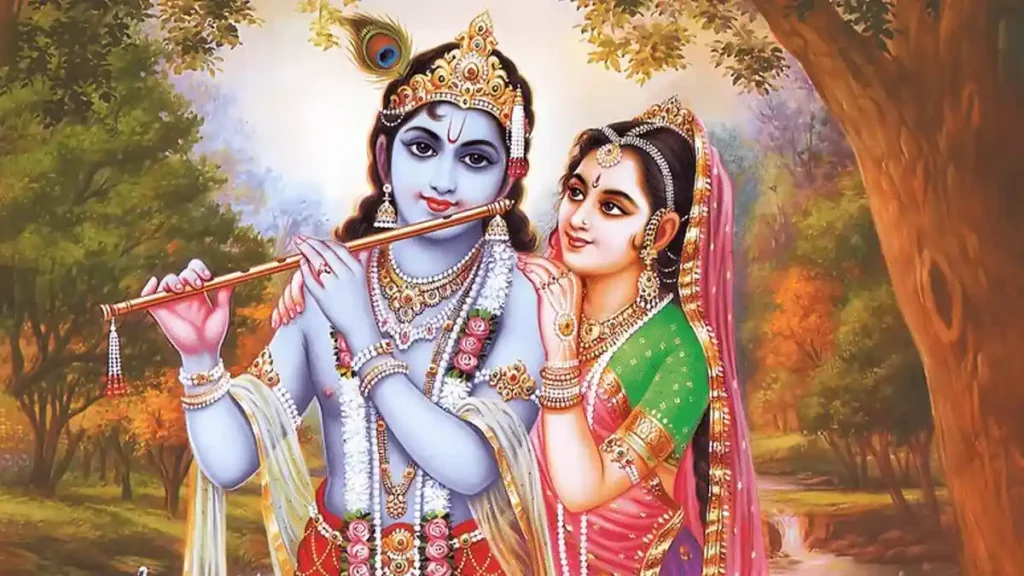
The Kripa Katash Stotram also discusses the true nature of Radha Rani; she is not only Lord Krishna’s beloved but also the embodiment of compassion, grace and divine beauty. Her Golden Form shines brighter than countless moons. Her Lotus-like eyes hold both tenderness and wisdom. Her smile radiates peace in a way that can calm the restless mind. She moves surrounded by sakhis, immersed in Raslila with Shyamsundar.
Even the devotees of Radha-Krishna believe that Lord Krishna blesses his devotees with whatever they ask, but Radha Rani is so compassionate that she won’t even wait for her devotee to ask for anything. Radha’s beauty is the outer expression of the love she holds within. She is the one who understands every devotee’s cry, forgives every flaw, and showers love without expecting anything in return. Her compassion touches even Krishna, who is described as being drawn to her sweetness and grace.
The Blessings and Spiritual Assurance of the Hymn
Towards its conclusion, the Radha Kripa Kataksh stotram becomes a comforting promise for devotees. It assures that whoever chants it with sincerity and devotion receives the blessings of Radha Rani. These blessings are not just limited to worldly pleasures and success; they also purify the heart, clear confusion, and uplift the spirit towards the divine. Many verses highlight that chanting this stotram can bless one with clarity, fulfilment of desires and the rare blessing of serving Radha-Krishna. Chanting this stotram on auspicious days, such as Eakadashi, or in Radha Kund or while remembering Radha Kund, can further multiply these blessings.
This assurance conveys a powerful spiritual message that the divine mercy is real, but it responds to sincerity. Even the smallest voice calling out from an honest
Final Thoughts on the Grace of Radha Kripa Kataksh
In its deepest essence, Radha Kripa Katash Stotram is a reminder that devotion is not only about perfection and great gestures through outer rituals, but it’s also about surrender. It invites the reader to stand before Radha Rani with all their imperfections, fears, knowing that she does not expect a flawless devotee, only a sincere one. The Strotram guides the heart from admiration to longing, and finally to hope. It teaches us that when we call out with genuine love, Radha Rani listens. And when she looks at us with mercy, even once, it fills life with peace, sweetness and joy.
Know more about Shree Radha Rani
Here are some common questions people often have about Radha Rani after reading the Radha Kripa Katash Strotam.
Yes, it is widely believed that Lord Shiva himself composed the Radha Kripa Kataksh Stotrarm, revealing it to Goddess Parvati as part of the Urdhvamnaya Tantra. This stotra is a beautiful prayer that praises the divine glance of Shri Radha Rani. It describes how her merciful look can bless devotees with spiritual upliftment, joy, and devotion.
Radha Rani is called the eternal Queen of Vrindavan because she rules Vrindavan not through power but through love, as she is the Hladini Shakti of Lord Krishna, the energy of love that is the very essence of Vrindavan's existence.
Vrindavan becomes sacred because of her moments with Shri Krishna. In the Radha Kripa Kataksha Stotra, she is called the one who mesmerises Krishna Himself, making her the true ruler of His heart. For devotees, calling her the Queen of Vrindavan means Vrindavan belongs to Radha, filled with her grace and love.
Radha is seen as older than Krishna. According to tradition, Radha Rani was born on the eighth day of the bright fortnight in Bhadrapada. Lord Krishna was born on the eighth day of the dark fortnight in the same month. This means Radha Rani is about fifteen days older than Lord Krishna.
Radha Rani chose not to open her eyes after birth till she saw Krishna. It is believed that when Nand Baba brought little Krishna to meet her, that's when Radha opened her eyes for the first time. Her first sight in this world was Krishna himself. This showed that her life and love are always connected to him.
The name “Vrishabhanu Nandini” means the beloved daughter of King Vrishabhanu. This title is special because it shows her earthly form in Barsana, where she brought joy to her parents and the whole area. In Radha Kripa Kataksha Stotra, this name highlights her divine birth and reminds followers that she came to this world to offer compassion. Remembering her as Vrishabhanu’s daughter helps us recall her human qualities of tenderness, sweetness, and innocence.
The Radha Rani Temple in Barsana has two key stages in its history. It is thought that the original temple was built around 5,000 years ago by King Vajranabh, who was the great-grandson of Shri Krishna. However, that temple eventually fell into ruins. Later, in 1675 AD, Raja Veer Singh Dev built the current temple at Barsana. The idols of Radha Rani were rediscovered by Saint Narayan Bhatt, a disciple of Chaitanya Mahaprabhu, and were then placed in this temple.
Radha Rani's marriage to Ayan comes from a past life story. In his previous birth, Ayan was a devotee of Lord Vishnu; he did intense penance to impress him and, as a boon, asked for Goddess Lakshmi to be his wife. Impressed by his devotion, Vishnu granted him the boon and promised that in the next life, he would marry Lakshmi.
In her next life, Lakshmi as Radha married Ayan. However, this marriage is described in scriptures as an act of Yogmaya. It was not real Radha who married Ayan, but a shadow form known as Vrinda Devi. Also known as Chaya Radha, she was created specifically to fulfil the conditions of a curse and to honour the past life blessings given to Ayan.
Radha's heart and devotion always belonged to Krishna alone. In fact, the Brahma Vaivarta Purana narrates that Radha and Krishna were married in a divine Gadharva ceremony in Bhandivran, witnessed by Brahma himself. The place is a sacred sight for the devotees.
According to a well-known story, Tulsi, also called Vrinda, was a close friend of Radha Rani in Goloka. During one Ras Leela, when Krishna was happily dancing with Radha and the gopis, Tulsi, out of her deep devotion, also stepped in to take part and delight in Krishna’s company
However, Radha, Krishna's eternal beloved, felt hurt and jealous. In her moment of emotion, she scolded Tulsi and cursed her to leave Goloka and be born on Earth. As a result of Radha’s curse, Tulsi was later born on Earth as Princess Vrinda, the daughter of King Kushadhvaja.
Even though Radha cursed Tulsi, it wasn't a punishment, but a divine arrangement to establish Tulsi's eternal presence on Earth for the benefit of all devotees. Krishna blessed Tulsi that her leaves would forever hold a special place in rituals dedicated to him.
Therefore, while Radha's curse sent Tulsi to Earth, Krishna's blessing ensured her immortality in devotion.
Related Posts
- All Posts
- Aarti
- Bhajan
- Chalisa
- Stotram
- Stuti
- Back
- Shiva
- Hanuman
- Shri Radha
- Durga
- Lakshmi
- Back
- Ganesh Ji
- Maha Lakshmi
- Lord Vishnu
- Durga Maa
- Shiva
- Back
- Krishna Bhajan
- Back
- Shri Radha
- Back
- Shri Ram
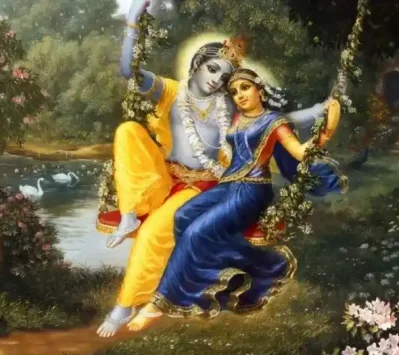
Radhe Radhe Bol Shyam Aaegye Lyrics in English and Hindi: The bhajan “Radhe Radhe Bol Shyam Aayenge” expresses a beautiful...
Satguru Mai Teri Patang is a devotional bhajan rooted in the imagery of a kite and its string, known as...
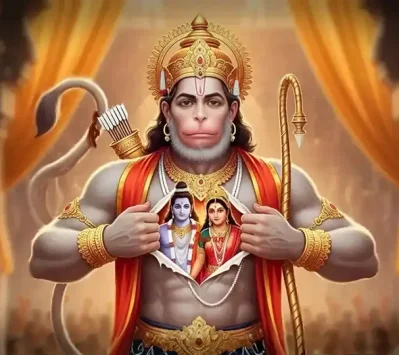
Shri Ram Janki Lyrics: Shri Ram Janki baithe hai mere seene mein, is a deeply devotional composition that expresses unwavering faith...