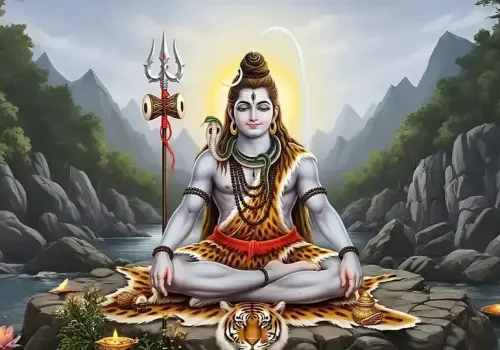
Aarti of Lord Shiva: Om Jai Shiv Omkara is a sacred hymn that praises Lord Shiva, the destroyer of evil and the giver of peace. Through its simple yet powerful verses, devotees show their deep devotion and seek his divine protection and blessings. The Aarti highlights Lord Shiva’s infinite powers while helping the mind focus on purity, calmness, and positivity.
In this article, you will find the complete lyrics of Om Jai Shiv Omkara, understand their spiritual meaning, learn the best time to recite it, and discover the significant benefits of chanting this sacred Aarti with devotion.

Om Jai Shiv Omkara Lyrics | God Shiva Aarti
Om Jai Shiv Omkara, Swami Jai Shiv Omkara
Brahma Vishnu Sada Shiv, Ardhangi Dhara ॥ Om Jai Shiv…॥
Ekanan Chaturanan Panchanan Raaje, Swami Panchanan Raaje
Hansaasan Garudaasan Vrishvahan Saaje ॥ Om Jai Shiv…॥
Do Bhuj Chaar Chaturbhuj Das Bhuj Ati Sohe, Swami Das Bhuj Ati Sohe
Trigun Roop Nirakhata Tribhuvan Jan Mohe ॥ Om Jai Shiv…॥
Akshamaala Vanamaala Mundamaala Dhaari, Swami Mundamaala Dhaari,
Tripuraari Kansaari Kar Maala Dhaari॥ Om Jai Shiv Onkaara…॥
Shwetaambar Peetambar Baghambar Ange, Swami Baghambar Ange
Sanakaadik Garunaadik Bhootadik Sange ॥ Om Jai Shiv…॥
Kar Ke Madhya Kamandal Chakra Trishul Dharta, Swami Chakra Trishul Dharta
Jagakarta Jagabharta Jagasanharkarta ॥ Om Jai Shiv…॥
Brahma Vishnu Sada Shiv Janat Avivayka, Swami Janat Avivayka
Pranavakshar Madhye Ye Teenon Eka ॥ Om Jai Shiv…॥
Trigun Shivji Ki Aarti Jo Koi Nar Gaave, Swami Jo Koi Nar Gaave
Kahat Shivanand Swami Manvanchhit Phal Paave ॥ Om Jai Shiv…॥
Om Jai Shiv Omkara, Swami Jai Shiv Omkara
Brahma Vishnu Sada Shiv Ardhangi Dhara ॥ Om Jai Shiv…॥
Written by: Pandit Shraddharam Phillauri.
Presented By: Mukti Mantra
Deeper meaning behind the Aarti of Lord Shiva:
Om Jai Shiv Omkara is a beautiful Aarti sung in praise of Lord Shiva, the supreme power who creates, preserves, and destroys the universe. The aarti focuses on the oneness of the Trinity (Brahma, Vishnu and Mahesh).
According to Shaivism, Lord Shiva is the source of all creation, and together with his divine consort Shakti, he manifests and governs the entire universe. This philosophy is also reflected in every verse of the Aarti of Lord Shiva.
Om Jai Shiv Omkara, Brahma Vishnu Sada Shiv, Ardhangi Dhara
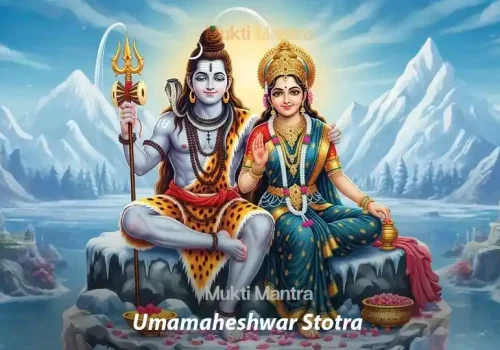
In this verse, devotees praise Lord Shiva as the form from which all three powers, Brahma, Vishnu, and Mahesh, emerge. He unites with Goddess Parvati as Ardhanarishvara, beautifully symbolising the perfect balance between masculine and feminine energies.
This form also represents the cosmic truth that creation is possible only when Shiva (pure consciousness) and Shakti (dynamic energy) come together. Without Shakti, Shiva remains still and inactive and without Shiva, Shakti has no direction.
Ekanan Chaturanan Panchanan Raaje
Here, Ekanan represents Lord Vishnu, Chaturanan refers to Brahma, who has four faces, and Panchanan represents Lord Shiva in his five-faced form. In these divine roles, He rides as Brahma on the swan (Hansa), as Vishnu on Garuda, the powerful eagle, and as Mahesh on Nandi, the sacred bull (Vrishabha).
Do Bhuj Chaar Chaturbhuj Das Bhuj Ati Sohe
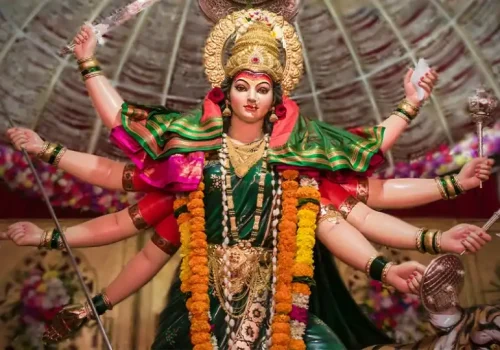
Here, Do Bhuj represents deities with two arms, symbolising simplicity and human-like grace. Chaar Chaturbhuj refers to those with four arms, like Lord Vishnu or some forms of Devi, reflecting divine balance and power. Das Bhuj denotes deities like Maa Durga, whose ten arms signify supreme strength and protection.
This verse again praises Lord Shiva as the origin of all divine forms and energies. Whether two-armed, four-armed, or ten-armed, every manifestation ultimately comes from Him. He embodies the three gunas: Sattva, which is purity; Rajas, which is action; and Tamas, which is stillness. However, He remains beyond their influence. The beings of all three worlds — heaven, earth, and the underworld are captivated by His radiant form.
Shwetaambar Peetambar Baghambar Ange
“Shwetaambar Peetambar Baghambar Ange” describes the unity of the three supreme forms of divinity. Brahma is called Shwetambar; he wears white garments that symbolise purity and creation. Vishnu is Peetambar; he dresses in yellow or golden robes that signify preservation and wisdom. Shiva, in his Shankara form, is Digambar; he is clothed in the vastness of space itself, representing renunciation and ultimate freedom from worldly attachments. The verse reminds us that all three forms, Brahma, Vishnu, and Mahesh, are one divine consciousness manifesting differently to sustain the universe.
“Sanakaadik Garunaadik Bhootadik Sange” means that from great sages like Sanaka to divine beings like Garuda and humble spirits (Bhoots), all stay in the company of Lord Shiva. This shows that He accepts every being and unites all forms of life in His divine presence.
Kar Ke Madhya Kamandal Chakra Trishul Dharta
Here, Lord Shiva holds a trident (Trishul), Vishnu’s Chakra, and Brahma’s Kamandal (water pot), symbolising creation, protection, and destruction. He is the Creator (Jagakarta), Preserver (Jagabharta), and Destroyer (Jagasanharkarta) of the entire universe, once again highlighting him as the supreme power behind all existence.
Trigun Shivji Ki Aarti Jo Koi Nar Gaave
Finally, it is said that those who sing this Aarti with love and devotion receive Lord Shiva’s blessings of peace, joy, and fulfilment. Through sincere chanting, devotees find their wishes fulfilled and their hearts filled with divine grace.
The Aarti of Lord Shiva repeatedly states that there is no true separation between Brahma, Vishnu, and Mahesh. All three represent the same eternal essence of Lord Shiva. It highlights that creation, preservation, and destruction are not separate powers but united expressions of Sada Shiv. Through this, devotees see Shiva as the highest source of all existence. He transcends every form but still exists within them all.
Best Time to Recite the Aarti of Lord Shiva
Daily Morning & Evening: The best times to recite the Aarti of Lord Shiva are early morning and evening, as during these peaceful hours, the mind is quiet and the surroundings are pure, allowing devotees to focus deeply on Lord Shiva’s divine presence and feel spiritually refreshed.
On Mondays & Maha Shivratri: Mondays also hold special significance for Lord Shiva. Reciting the Aarti of Lord Shiva on this day is believed to fulfil heartfelt wishes and remove life’s obstacles. In addition, chanting it during Maha Shivratri and the holy month of Shravan brings immense blessings and spiritual upliftment from Lord Shiva.
For the most powerful experience, the Aarti of Lord Shiva is best performed after reciting the Lord Shiva Chalisa
Benefits of Reading the Aarti of Lord Shiva
- Brings Peace: Regular recitation of the Aarti of Lord Shiva fills the mind with peace and calmness. It also helps in removing stress, improving focus, and bringing mental clarity.
- Removes Negativity: The divine vibrations created during the Aarti of Lord Shiva drive away negative thoughts and energies, enabling devotees to maintain emotional balance and positivity in life.
- Brings Prosperity: By chanting the Aarti of Lord Shiva with faith, devotees invite Lord Shiva’s blessings of happiness, wealth, and prosperity into their homes and lives.
- Removes Obstacles: Performing the Aarti of Lord Shiva regularly helps overcome challenges and clears the path toward new opportunities and success.
- Gives Inner Strength: The Aarti strengthens self-confidence, courage, and inner peace, allowing devotees to face life’s difficulties with strength and devotion.
- Blessed Married Life: Worshipping Lord Shiva through the Shiv Aarti promotes harmony, understanding, and love in relationships, leading to a peaceful married life.
- Fulfils Wishes: As the Aarti of Lord Shiva beautifully states, “Jo chahe phal paaye,” devotees who sing it with pure faith receive their heart’s desires and divine blessings.
- Burns Ego and Desires: When devotees light camphor during the Aarti, they offer their ego, anger, and desires to Lord Shiva. As the flame burns, it purifies the soul and brings the devotee closer to divine consciousness.
- Leads to Salvation: Moreover, when devotees perform the Shiva Aarti with true faith and devotion, they follow the path of spiritual growth. Through regular recitation, they progress toward liberation, gaining inner peace and enlightenment.
Know more about Lord Shiva
Here are some common questions people often ask about Lord Shiva after reading the Aarti of Lord Shiva:
The name of Lord Shiva's snake is Vasuki, the respected king of the Nagas, or serpent beings. He played a crucial role in the Samudra Manthan, the great churning of the ocean. He is also seen as Shiva's loyal companion and a holy ornament.
Shiva wears a snake around his neck to show his control over danger, death, ego, and all negative forces like poison and desire. The snake also represents the strong Kundalini energy, indicating that Lord Shiva has mastered it. His connection with the serpent reflects both protection for all creatures and freedom from fear and the constraints of time.
Even before Vasuki decorated Lord Shiva’s neck, he was respected throughout the three worlds as the Nāgarāja, the King of Serpents. Born to Kadru and Sage Kashyapa, Vasuki was no ordinary serpent; he was strong, wise, and devoted to dharma. While many of his serpent kin were caught in pride and conflict, Vasuki chose the path of penance, service, and devotion to the divine. Impressed by his devotion and dedication, Lord Shiva accepted Vasuki and placed him around his neck. This made him a symbol of fearlessness, protection, and eternal energy.
The snake also represents the endless cycle of time (kaal), which includes creation, preservation, and destruction. By wearing it around his neck, Lord Shiva demonstrates that he is Mahakal, the one who governs and exists beyond time itself, remaining eternal and free from its limits.
Lord Shiva drank poison to protect the universe from Halahal poison that emerged during the Samudra Manthan, or churning of the cosmic ocean. Devas and Asuras came together to get Amrit, the nectar of immortality. However, before the nectar could be obtained, a deadly poison called Halahala emerged. Its fumes were so strong that they could destroy all of creation.
To protect the universe, Lord Shiva consumed the poison and kept it in his throat. This caused his throat to turn blue. From that point on, he was known as Neelakantha, which means the blue-throated one. This name symbolises his great sacrifice for the welfare of all beings.
This act shows the deepest level of Vairagya (detachment) and compassion. Shiva willingly takes on the world's negativity without looking for a reward. He teaches that real spiritual strength comes from self-sacrifice and from using one's power for Loka Kalyana, the welfare of all beings, instead of for personal gain.
Lord Shiva, known as Mahadeva, is called the Destroyer because he brings an end to both the physical universe and the inner darkness that binds every soul.
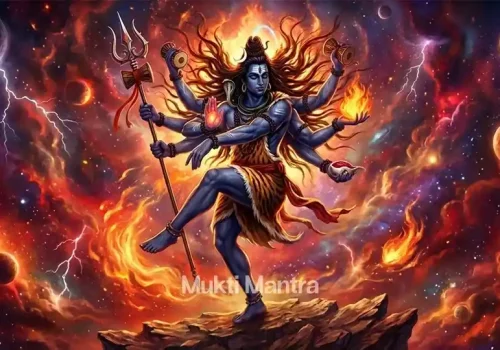
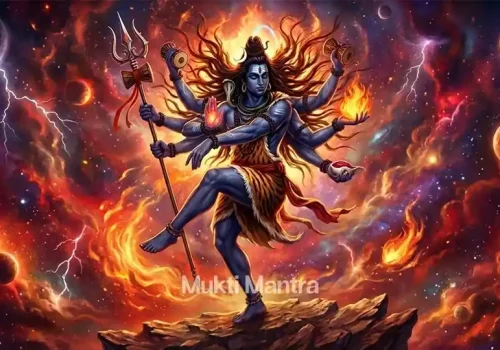
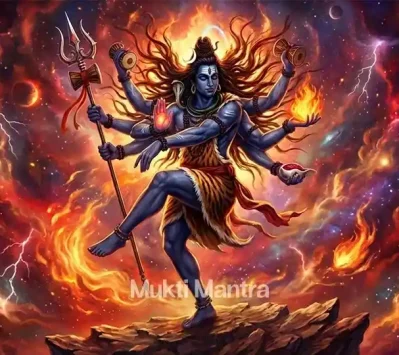
When he performs the Tandava, the cosmic dance of destruction, it signals the end of the universe. This is a necessary step before a new creation can begin. This destruction is not chaos; it is renewal on a cosmic scale.
Shiva’s power works in the same way within every being. He destroys the ego (Ahamkara), ignorance, and attachment, the inner poisons that keep us trapped in illusion. Through his power, he helps dissolve pride and separateness, guiding us toward self-realisation and Moksha (liberation).
Thus, Shiva’s destructive energy symbolises transformation; it ends the false so the truth may emerge, both in the universe and within the human soul.
Shiva is sometimes depicted with five faces, known as the Panchamukha or Sadashiva. These faces are Sadyojāta, Vāmadeva, Aghora, Tatpurusha, and Īśāna. Each one represents a different role and meaning. They connect to the five directions: East, West, North, South, and the sky above. They also correspond to the five natural elements: earth, water, fire, air, and space. Together, the faces express Shiva’s abilities to create, protect, destroy, conceal the truth, and ultimately grant liberation (moksha).
Goddess Shakti, the Adi-Shakti herself, took birth as Goddess Sati, also known as Dakshayani. She became the first wife of Lord Shiva and chose to marry him despite her father, King Daksha's, disapproval. Later, when Daksha insulted Shiva, Sati took her own life in the sacrificial fire. She was reborn as Goddess Parvati and married Shiva, completing the cosmic union.
Shiva and Nandi first met after Nandi completed intense penance by standing in the River Bhuvana. Lord Shiva appeared before Nandi to bless him with eternal life, and Nandi then became Shiva's loyal companion and vahana (vehicle).
Related Posts
- All Posts
- Aarti
- ashtakam
- Bhajan
- Chalisa
- Hanuman Chalisa
- Stotram
- Stuti
- Back
- Shiva
- Hanuman
- Shri Radha
- Durga
- Lakshmi
- Back
- Ganesh Ji
- Maha Lakshmi
- Lord Vishnu
- Durga Maa
- Shiva
- Back
- Krishna Bhajan
- Back
- Shri Radha
- Back
- Shri Ram
Umamaheshwar Stotra Lyrics | श्री उमा महेश्वर स्तोत्रं: नमः शिवाभ्यां नवयौवनाभ्यां परस्पराश्लिष्टवपुर्धराभ्याम् । नगेन्द्रकन्यावृषकेतनाभ्यां नमो नमः शङ्करपार्वतीभ्याम् ॥ Read full...
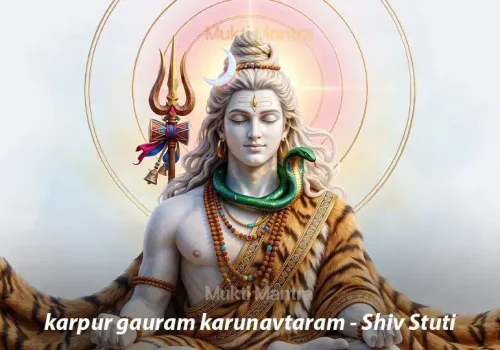
Karpur Gauram Karunavtaram Lyrics: Karpura-Gauram Karunavataram Samsara-Saram Bhujagendra-Haram || Read full Mantra with its word-by-word meaning below: Karpur Gauram Karunavtaram...
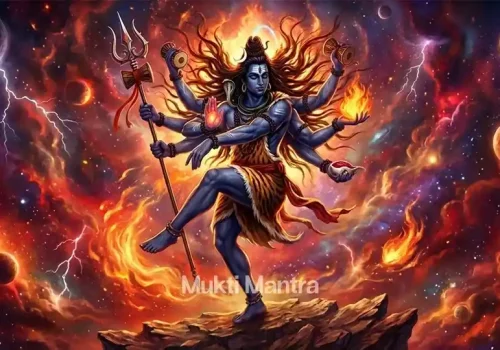
Shiv Tandav Stotram Lyrics in English: Jatāṭavī-gala-jjala-pravāha-pāvita-sthale Gale’valambya lambitāṃ | It is one of the most powerful and visually striking...