Shri Ram Stuti: Shri Ramchandra Kripalu Bhajman एक अत्यंत लोकप्रिय प्रार्थना है, जिसे तुलसीदास जी ने रचित किया था। यह Ramchandra Stuti भगवान श्रीराम के दिव्य स्वरूप, उनकी करुणा, सौम्यता और धर्मनिष्ठा का वर्णन करती है। Shri Ramchandra Kripalu Bhajman का पाठ करने से मन में भक्ति, शांति और साहस की भावना जागृत होती है। यह Shri Ram Stuti मंदिरों और घरों में बड़े भाव से गाई जाती है और भक्तों को श्रीराम की कृपा एवं आशीर्वाद प्रदान करती है।
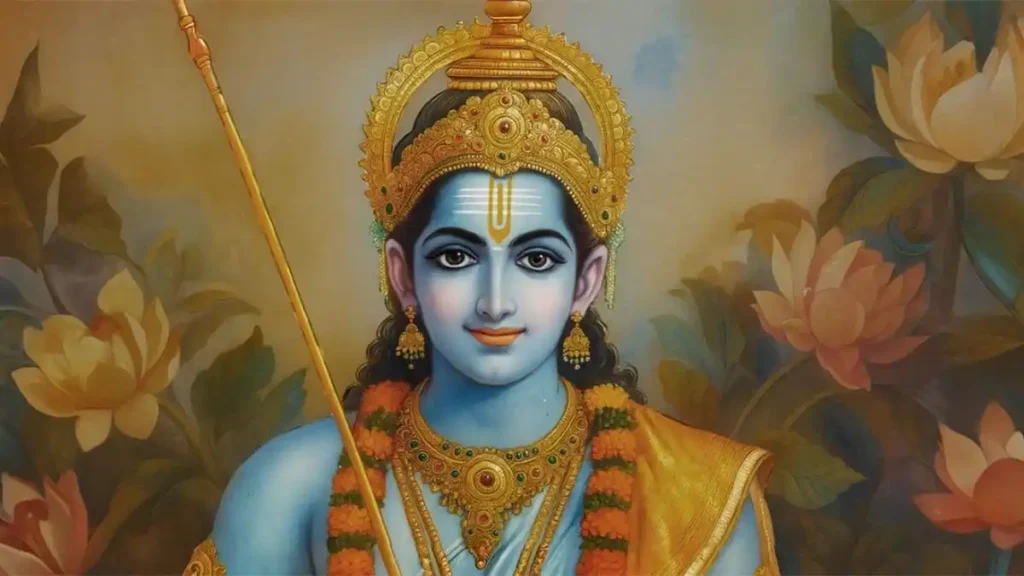
Shri Ram Stuti (Shri Ramchandra kripalu bhajman)
॥दोहा॥
श्री रामचन्द्र कृपालु भजुमन
हरण भवभय दारुणं ।
नव कंज लोचन कंज मुख
कर कंज पद कंजारुणं ॥१॥
कन्दर्प अगणित अमित छवि
नव नील नीरद सुन्दरं ।
पटपीत मानहुँ तडित रुचि शुचि
नोमि जनक सुतावरं ॥२॥
भजु दीनबन्धु दिनेश दानव
दैत्य वंश निकन्दनं ।
रघुनन्द आनन्द कन्द कोशल
चन्द दशरथ नन्दनं ॥३॥
शिर मुकुट कुंडल तिलक
चारु उदारु अङ्ग विभूषणं ।
आजानु भुज शर चाप धर
संग्राम जित खरदूषणं ॥४॥
इति वदति तुलसीदास शंकर
शेष मुनि मन रंजनं ।
मम् हृदय कंज निवास कुरु
कामादि खलदल गंजनं ॥५॥
मन जाहि राच्यो मिलहि सो
वर सहज सुन्दर सांवरो ।
करुणा निधान सुजान शील
स्नेह जानत रावरो ॥६॥
एहि भांति गौरी असीस सुन सिय
सहित हिय हरषित अली।
तुलसी भवानिहि पूजी पुनि-पुनि
मुदित मन मन्दिर चली ॥७॥
॥सोरठा॥
जानी गौरी अनुकूल सिय
हिय हरषु न जाइ कहि ।
मंजुल मंगल मूल वाम
अङ्ग फरकन लगे।
Written by: Goswami Tulsidas Ji
Presented By: Mukti Mantra
Deeper Meaning of Ramchandra Stuti - Shri Ram Chandra Kirpalu Bhajman
Shri Ranchandra Stuti is more than a praise of Lord Rama’s beauty and virtues. Each verse carries a deeper meaning that guides devotees to view worshipping God as an inner practice rather than an outer ritual. Tulsidas Ji not only describes Lord Rama, but he also shows us how to see and love him beyond outer rituals and within our hearts.
The deeper meaning of this Shri Ram Stuti reveals itself in layers. It begins with admiring his divine form, then progresses to understanding his compassion, and ultimately leads to personal transformation through devotion.
The Lotus-Like Beauty of the Lord in Ramchandra Stuti
The stuti begins by describing Lord Rama’s compassionate nature and calling oneself to worship him. It serves as a gentle reminder that Bhakti is not an outer ritual but an inner awakening. True devotion is found not in grand displays but in quiet remembrance and in the sincere moments when the heart seeks God within itself.
Then, Tulsidas Ji moves to describing the appearance of Lord Rama. He is the embodiment of serenity and radiance; his eyes are like newly blossomed Lotuses (Nav Kanj Lochan), his hands are gentle yet strong, and his feet are glowing with a soft reddish hue (Kar Kanj, Pad Kanj Aruṇam). Tulsidas ji compares every part of his body – his eyes, face, hands and feet to that of a lotus.
The Lotus carries a deep meaning; it grows in muddy water yet remains untouched by it. Lord Rama lives in this imperfect world, yet remains pure and detached. Just as the lotus rises above the muddy water yet beautifies it, the devotee, too, can live in the world yet remain inwardly untainted by anchoring the heart in devotion.
The Protector and Source of Compassion
Moving from his gentle appearance to his purpose, Tulsidas Ji describes his divine strength. Tulsidas Ji calls him Deenbandhu, the friend of the helpless, and Daanav Daittya Vansh Nikandan, the destroyer of evil. But even here, the focus is not on violence but rather on his compassion.
He removes darkness not through anger but through light, through the path of righteousness, courage and love.
He wears celestial ornaments, the crown, the tilak, and carries a Dhanush (bow), yet none of them symbolise pride. It represents his readiness to protect Dharma and help those who seek refuge. His long arms holding the bow are not signs of war, but of shelter.
Lord Rama’s compassion is compared with a Lotus and a Dhanush here(bow). It’s Gentle like Lotus yet firm like the Dhanush
True Bhakti in Ramchandra Stuti: Inviting the Lord Within
Here, Tulsidas Ji explains that true Bhakti is not about outer rituals but about inner surrender. He does not ask for wealth or victory. Instead, he pleads with the Lord to make his heart like a lotus, because the lotus is where the Lord resides.
Tulsidas Ji seeks the destruction of his enemies. However, these enemies are inner ones: desire, anger, greed, attachment, and ego (kām, krodh, lobh, moh, ahankār), not external ones.
The battle between good and evil is not fought in Lanka, but within our own minds. The Lord who defeated Ravana can also conquer our inner demons if we surrender to Him completely.
When Pure Devotion Meets Divine Blessing
“Man jahi raachyo milahi so, var sahaj sundar saawaro…”
This verse reveals Mata Sita’s wishes for the qualities she wants in her husband during her svayamvar: sahaj sundar saawaro, which means naturally graceful and beautiful; Karuna nidhaan, or deeply compassionate; sujan-sheel, meaning gentle, noble, and of pure character; and Sneh Jaanat, someone who truly understands love.
This verse also reveals one of the deepest truths of bhakti: the Lord comes where the heart truly calls Him, not through rituals, not through perfection, but through love.
Devotion is not about knowledge or perfection; it’s about love. Lord Rama is karuṇā nidhān, the ocean of compassion, and sujān śīl, gentle and wise. He understands the unspoken tears, the silence and the surrender. He knows the heart that loves Him, even if words fail.
In the final verse, “Ehi bhaanti Gauri asees sun, Siya sahit hiy harshit ali…” Goddess Parvati blesses Sita, and her heart overflows with joy. Surrounded by her friends, she offers her devotion to Bhavani repeatedly before walking toward the temple with a peaceful smile.
This moment symbolises the result of true faith as inner joy. When love takes the place of fear and purity replaces desire, the heart naturally blooms with peace, just like Sita’s did.
Final Thoughts on the Grace Reflected in Ramchandra Stuti
Shri Ramchandra stuti teaches us a lot about the appearance and nature of Shri Ram, as well as what true devotion is. Tulsidas ji repeatedly compares Shri Ram to a lotus, as it reflects the perfect devotee’s life, rooted in the world yet untouched by it. Just like a lotus grows in muddy water but remains above it, so too does a perfect devotee remain unaffected by the world. It teaches that bhakti is not in outer rituals but in complete surrender.
When the devotee learns to see purity as the lotus, courage as Rama’s bow, and devotion as Sita’s love, the heart becomes a suitable place for the Divine to reside.
Know more about Lord Rama
Here are commonly asked questions related to Shri Ram that people often ask after reading Shri Ramchandra Stuti
Ram Navami is celebrated to honour the birth of Lord Rama. He is regarded as the seventh incarnation of Lord Vishnu. Lord Rama came to restore dharma and bring joy to the world.
He is called Maryada Purushottam because he lived by the highest moral values, followed dharma even in the most difficult situations, treated everyone with compassion and respect, always chose the right path and had control over his desires, anger and impulses.
His life teaches us that Dharma is not just about rules; it is about choosing what is right even at the cost of personal loss. Whether as a son, king, husband or a leader, Rama upheld duty above personal comfort and desire. His choices were painful, but they were always rooted in truth and righteousness.
Thus, Ram Navami is also a reminder of our own commitment to Dharma. It invites us to reflect on how we speak, act, and respond in our daily lives.
Ram Navami is celebrated twice because one festival marks Lord Rama’s birth, and the other celebrates His return to Ayodhya after exile.
The first celebration takes place on the ninth day of the Chaitra month. It marks the birth of Lord Rama. The second celebration takes place in the month of Kartik, which is October or November, and honours his return to Ayodhya. This second celebration is part of the larger Diwali festivities.
No, Ram and Lakshman were not real brothers. They were half-brothers. Ram was born to King Dasharatha and his first queen, Kausalya. Lakshman was the son of King Dasharatha and his third wife, Sumitra. Even though they had different mothers, they shared the same father. They are celebrated in the Ramayana for their strong, inseparable bond.
Their bond also carries a deeper spiritual meaning. Lord Rama represents the atma (the soul), the divine essence within every being, and Lakshman represents chetna or consciousness, the ever-alert and devoted companion of the soul.
Just as Lakshman always stayed with Shri Rama, protecting him, serving him and aligning his every action with Ram's purpose, our consciousness, when purified, naturally stays aligned with the divine.
Their inseparable bond teaches us that when our consciousness is devoted and disciplined, it follows the divine’s path with clarity, loyalty, and purity.
Lord Rama’s birth is celebrated every year on the ninth day of the Chaitra month. According to astronomical calculations that align with the planetary positions described in the Ramayana, Lord Rama is believed to have been born on January 10, 5114 BCE, at 12:30 PM. Some historians estimate that Lord Rama was born between 5114 BCE and 7119 BCE. These calculations provide an approximate date based on the positions of the planets mentioned in the ancient texts.
Caution - It is important to note that these dates, derived from astronomical alignments, serve a devotional and philosophical purpose rather than a strictly historical one, affirming the timeless reality of Lord Rama's ideal life.
Lord Ram’s full name is Shri Ramchandra, or Shri Ramchandra Ji. This name is common in prayers and devotional texts, such as the Ramchandra Stuti. In Sanskrit texts, Lord Rama is known as Raghunandan. This means "son of the Raghu dynasty." It highlights his background as King Dasharatha’s son from Ayodhya.
Shri Ram had two main teachers. Rishi Vasishtha was his family guru and taught him the Vedas and scriptures. Maharshi Vishwamitra taught him archery and provided divine weapons, making him an exceptional warrior. Vasishtha taught him the basics of learning and trained him for royal duties. In contrast, Vishwamitra guided Ram’s military and spiritual growth, especially when Ram protected Vishwamitra's yajna.
Lord Rama is regarded as the seventh incarnation of Lord Vishnu, a principal deity in Hinduism. He came to Earth to protect dharma, which means righteousness. He aimed to defeat the demon king Ravana and restore balance in the world. Throughout his life, teachings, and actions, Lord Rama shows virtue, courage, and devotion. This earns him great respect as an incarnation of Vishnu and the title of Maryada Purshotam Ram.
No, Hanuman Ji is an incarnation of Lord Shiva. His mother, Anjana, prayed to Lord Shiva for a son. Shiva fulfilled her wish by becoming Hanuman, who was destined to serve Lord Rama with steady devotion. Many texts, including the Shiva Purana and the Hanuman Chalisa, call him “Shankar Suvan,” meaning the son of Shiva. Read the Hanuman Chalisa Here
Related Posts
- All Posts
- Aarti
- Bhajan
- Chalisa
- Stotram
- Stuti
- Back
- Shiva
- Hanuman
- Shri Radha
- Durga
- Lakshmi
- Back
- Ganesh Ji
- Maha Lakshmi
- Lord Vishnu
- Durga Maa
- Shiva
- Back
- Krishna Bhajan
- Back
- Shri Radha
- Back
- Shri Ram
Shiv Tandav Stotram Lyrics with meaning: Jatāṭavī-gala-jjala-pravāha-pāvita-sthale Gale’valambya lambitāṃ | It is one of the most powerful and visually striking...
Lyrics of Aarti Kunj Bihari ki – Lord Krishna Aarti – आरती कुंजबिहारी की, श्री गिरिधर कृष्ण मुरारी की। यह...
The Ashutosh Shashank Shekhar Lyrics is a Stuti dedicated to Lord Shiva, praising him through powerful names that reflect his...