Maha Lakshmi Chalisa – नमो महा लक्ष्मी जय माता। तेरो नाम जगत विख्याता॥ महा लक्ष्मी चालीसा एक अत्यंत पवित्र स्तुति है, जिसमें माँ लक्ष्मी के 40 सुंदर छंदों का वर्णन है। यह Maha Lakshmi Chalisa माता लक्ष्मी की महिमा, कृपा और धन-समृद्धि प्रदान करने वाली शक्ति को दर्शाती है। इसके नियमित पाठ से घर-परिवार में सुख, शांति और वैभव का वास होता है। भक्त इसे विशेष रूप से शुक्रवार और दीपावली के अवसर पर श्रद्धापूर्वक गाते हैं ताकि माँ लक्ष्मी का आशीर्वाद प्राप्त हो सके।
Maha Lakshmi Chalisa ॥ श्री महालक्ष्मी चालीसा ॥
॥ दोहा ॥
जय जय श्री महालक्ष्मी, करूँ मात तव ध्यान।
सिद्ध काज मम किजिये, निज शिशु सेवक जान॥
॥ चौपाई ॥
नमो महा लक्ष्मी जय माता। तेरो नाम जगत विख्याता॥
आदि शक्ति हो मात भवानी। पूजत सब नर मुनि ज्ञानी॥
जगत पालिनी सब सुख करनी। निज जनहित भण्डारण भरनी॥
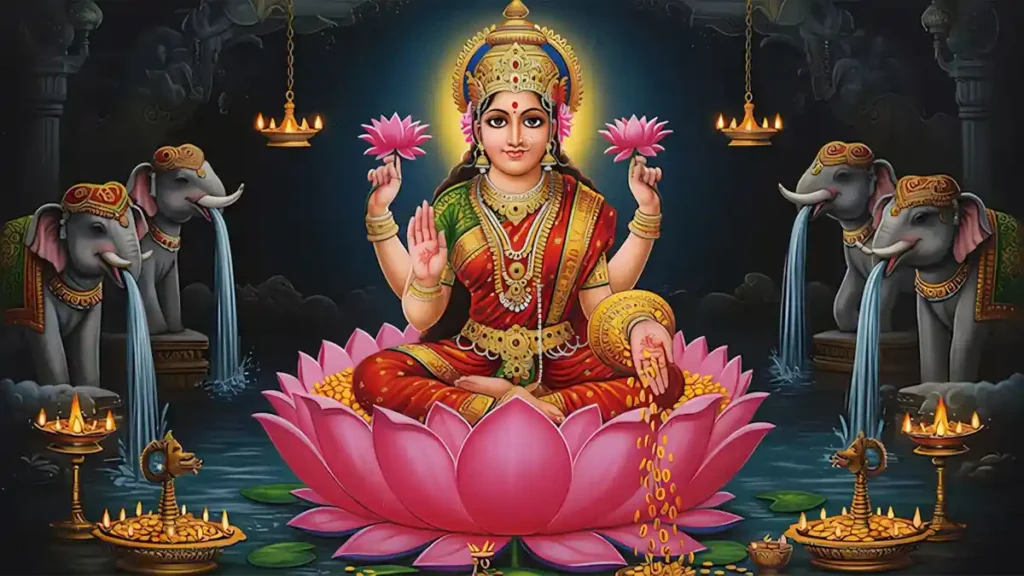
श्वेत कमल दल पर तव आसन।मात सुशोभित है पद्मासन॥
श्वेताम्बर अरू श्वेता भूषण। श्वेतही श्वेत सुसज्जित पुष्पन॥
शीश छत्र अति रूप विशाला। गल सोहे मुक्तन की माला॥
सुंदर सोहे कुंचित केशा। विमल नयन अरु अनुपम भेषा॥
कमलनाल समभुज तवचारि। सुरनर मुनिजनहित सुखकारी॥
अद्भूत छटा मात तव बानी। सकलविश्व कीन्हो सुखखानी॥
शांतिस्वभाव मृदुलतव भवानी। सकल विश्वकी हो सुखखानी॥
महालक्ष्मी धन्य हो माई। पंच तत्व में सृष्टि रचाई॥
जीव चराचर तुम उपजाए। पशु पक्षी नर नारी बनाए॥
क्षितितल अगणित वृक्ष जमाए। अमितरंग फल फूल सुहाए॥
छवि विलोक सुरमुनि नरनारी। करे सदा तव जय-जय कारी॥
सुरपति औ नरपत सब ध्यावैं। तेरे सम्मुख शीश नवावैं॥
चारहु वेदन तब यश गाया। महिमा अगम पार नहिं पाये॥
जापर करहु मातु तुम दाया। सोइ जग में धन्य कहाया॥
पल में राजाहि रंक बनाओ। रंक राव कर बिमल न लाओ॥
जिन घर करहु माततुम बासा। उनका यश हो विश्व प्रकाशा॥
जो ध्यावै से बहु सुख पावै। विमुख रहे हो दुख उठावै॥
महालक्ष्मी जन सुख दाई। ध्याऊं तुमको शीश नवाई॥
निज जन जानीमोहीं अपनाओ। सुखसम्पति दे दुख नसाओ॥
ॐ श्री-श्री जयसुखकी खानी। रिद्धिसिद्ध देउ मात जनजानी॥
ॐह्रीं-ॐह्रीं सब व्याधिहटाओ। जनउन विमल दृष्टिदर्शाओ॥
ॐक्लीं-ॐक्लीं शत्रुन क्षयकीजै। जनहित मात अभय वरदीजै॥
ॐ जयजयति जयजननी। सकल काज भक्तन के सरनी॥
ॐ नमो-नमो भवनिधि तारनी। तरणि भंवर से पार उतारनी॥
सुनहु मात यह विनय हमारी। पुरवहु आशन करहु अबारी॥
ऋणी दुखी जो तुमको ध्यावै। सो प्राणी सुख सम्पत्ति पावै॥
रोग ग्रसित जो ध्यावै कोई। ताकी निर्मल काया होई॥
विष्णु प्रिया जय-जय महारानी। महिमा अमित न जाय बखानी॥
पुत्रहीन जो ध्यान लगावै। पाये सुत अतिहि हुलसावै॥
त्राहि त्राहि शरणागत तेरी। करहु मात अब नेक न देरी॥
आवहु मात विलम्ब न कीजै। हृदय निवास भक्त बर दीजै॥
जानूं जप तप का नहिं भेवा। पार करो भवनिध वन खेवा॥
बिनवों बार-बार कर जोरी। पूरण आशा करहु अब मोरी॥
जानि दास मम संकट टारौ। सकल व्याधि से मोहिं उबारौ॥
जो तव सुरति रहै लव लाई। सो जग पावै सुयश बड़ाई॥
छायो यश तेरा संसारा। पावत शेष शम्भु नहिं पारा॥
गोविंद निशदिन शरण तिहारी। करहु पूरण अभिलाष हमारी॥
॥ दोहा ॥
महालक्ष्मी चालीसा, पढ़ै सुनै चित लाय।
ताहि पदारथ मिलै, अब कहै वेद अस गाय॥
॥ इति श्री महालक्ष्मी चालीसा ॥
Also Read: Lakshmi Mata Aarti
Written by: Ramdas Ji
Presented By: Mukti Mantra
Important Things to Know Before Reciting Maha Lakshmi Chalisa
Mahalakshmi, the goddess of wealth and prosperity, is always associated with purity and cleanliness. It is believed that she only resides in places that are neat and well-maintained. Just as we offer flowers and prayers, like reciting the Maha Lakshmi Chalisa or Aarti, keeping our homes, surroundings, and especially the puja room clean is also important for receiving her blessings. Where there is dirt, disorder, or neglect, the goddess is said to leave. Cleanliness involves more than keeping things tidy on the outside; it also means maintaining pure hearts. A clean and peaceful space creates positive energy, making it easier to welcome the grace of Goddess Lakshmi into our lives.
Beej Mantras of Mahalakshmi mentioned in the Maha Lakshmi Chalisa
In the Mahalakshmi Chalisa, she is praised as the jagat-palini, the creator of the five elements, the nurturer of all beings and the one worshipped by devas, rishis and humans. Here, she is not just Lakshmi, the goddess popularly associated with wealth and prosperity; she is the supreme cosmic form, the shakti that sustains the entire universe.
Because she is the source of all creation, the Mahalakshmi Chalisa invokes her through powerful beej mantras such as Om Shree, Om Hreem, Om Kleem, and Om Namo.
Om Shree is for auspiciousness and prosperity, Shree being another name of Goddess Lakshmi herself. Om Hreem embodies her inner strength, symbolising divine female energy often associated with goddess Bhuvaneshwari. Om Kleem brings the power of attraction and fulfilment, and is often associated with Lord Krishna, Maa Kali and Maa Durga. At last, Om Namo means bowing down with devotion.
When we examine the Maha Lakshmi chalisa, we notice a subtle yet beautiful distinction between Lakshmi and Mahalakshmi. Lakshmi is the form who blesses the home with wealth, peace and comfort, whereas Mahalakshmi is the supreme form, the Shakti that created the universe and holds every power within herself.
The Deeper Meaning of Maha Lakshmi Chalisa
The Mahalakshmi Chalisa is often chanted to gain money and success, but the chalisa actually guides a person towards inner abundance first. It teaches that true prosperity begins when the mind becomes calm, and the heart is filled with gratitude.
Lakshmi is the energy that brings balance, beauty, harmony and growth. By reciting chlisa, we not only ask the goddesses for blessings but also invoke these qualities within us. Explore the deeper meaning behind Chalisa, including why she sits on a white lotus, how Ashta Lakshmi relates to our daily life, what devotion truly requires and more.
1. Lakshmi as the Energy of Harmony and Stability
The Chalisa begins by describing Mahalakshmi as the force that maintains balance and harmony. She is the nurturer of the universe, maintaining the balance of rhythm, stability, and growth. This means that inviting Lakshmi into life is not only about seeking wealth and prosperity. It’s about creating order in everyday life. The Chalisa indirectly reminds us that prosperity flourishes where discipline and harmony exist.
In daily life, devotees are encouraged to create stability through simple actions. These include keeping the home clean, maintaining routines, staying honest in work, and treating others with respect. These may seem like ordinary habits, but spiritually, they help create an environment where grace can settle. This foundation of outer harmony then necessitates Inner Focus and Sincerity in Devotion.
2. Inner Focus and Sincerity in Devotion
Throughout the chalisa, there is great emphasis on ‘focus.’ Lakshmi Mata responds to a heart that is sincere and attentive, not restless or divided. It also means that the goddess is not impressed by grand rituals but by the sincerity of our devotion. A wandering mind will only focus on the material benefits that it can get from here, but a sincere heart will concentrate purely on Godesses.
Pure attention means being present with your thoughts, prayers and actions altogether. While chanting chalisa or any other prayer, if the mind wanders to different thoughts such as work, responsibilities, desires or other things, it implies that the devotee is praying simply to gain material wealth. However, complete focus is on the goddess Lakshmi; the prayer gains emotional weight.
When our attention becomes calm and centred, life no longer feels scattered. Lakshmi represents that sense of inner balance, when our minds align with her qualities, true abundance begins to flow from within
3.Living with Purity: A Sacred Teaching of the Maha Lakshmi Chalisa
One of the most important lines in the Chalisa describes Mahalakshmi seated on a white lotus: “Shwet Kamal Dal Par Tav Aasan.” The lotus is a flower that grows in mud yet remains untouched by it. White Lotus takes this symbolisation even further. White stands for purity, truth, and detachment. Although Lakshmi Mata is the goddess who grants wealth, she sits on a symbol of Vairagya, detachment from ego, greed, and worldly illusions.
This teaches a powerful message: Wealth is not a problem; attachment is. Its possession does not bind you, but obsession does.
The Maha Lakshmi Chalisa encourages devotees to welcome wealth but use it with dignity, generosity and responsibility. Wealth should support Dharma, not bhoga (excessive indulgence). When wealth is used to uplift others, sustain the family and help the needy while maintaining a pure intent, it becomes Lakshmi. When misused, it becomes a cause of downfall. Money is a tool, not the purpose of life.
4. Lakshmi as the Mother Who Nurtures Every Aspect of Life
The chalisa repeatedly refers to Lakshmi as the mother who creates, nurtures and protects. Lakshmi is not only the giver of wealth, but she is also the source of wisdom, calmness, confidence and good health.
This helps us understand that her blessings are not limited to material gains. She is the divine mother who nourishes every aspect of life, including the mind, body, relationships, strength and wisdom.
This is where the knowledge of Ashta-Lakshmi becomes essential. Ashta- Laksmhi represents eight forms of prosperity:
- Aadi Lakshmi (Primordial abundance)
- Dhan Lakshmi (Material wealth)
- Dhanya Lakshmi (Food and nourishment)
- Gaja Lakshmi (Power, dignity, respect)
- Santana Lakshmi (Children and family harmony)
- Veera/Dhairya Lakshmi (Courage and confidence)
- Vijaya Lakshmi (Success and victory)
- Vidya Lakshmi (Knowledge and wisdom)
When devotees chant the Mahalakshmi chalisa, they are not seeking money. They are unconsciously asking for balance across all eight dimensions of life. A person with only wealth but no knowledge suffers. One with knowledge but no courage cannot progress. One with success but no peace feels empty.
It reminds us that true prosperity comes only when all forms of Lakshmi bless a person.
5. Grace and the Transformation of Destiny
In the Chalisa, it is also explained that Mahalakshmi’s grace has the power to transform a person’s life instantly. She can uplift someone from difficult situations or humble those whose ego has grown too much. This reminder keeps devotees grounded and hopeful at the same time.
Although her grace does not mean that hard work becomes unnecessary. It means that effort becomes fruitful. It means being at the right place at the right time, receiving opportunities, clarity or protection. It is only through humility, gratitude and sincerity that a devotee can receive this grace.
This also teaches us two important things: we should never feel hopeless during difficult phases, and we should remain humble when life is going well. Ultimately, this divine blessing manifests outwardly as The Radiance of a Home Blessed by Lakshmi.
6. The Radiance of a Home Blessed by Mahalakshmi
Throughout the chalisa, it is repeatedly said that wherever Lakshmi resides, that place becomes harmonious. When a home is clean, peaceful, respectful, and filled with gratitude, it automatically attracts good fortune.
This applies equally to our inner home, our mind. When thoughts are pure, intentions are clean, and actions are honest, one’s presence becomes magnetic.
For a devotee, maintaining inner purity requires simple practices such as speaking kindly, avoiding gossip or speaking ill of others, forgiving others, keeping promises, doing charity, and remaining grateful. These actions make our hearts so pure that Goddess Lakshmi resides in them.
7. The Difference between Attachment and Devotion explained in Maha Lakshmi Chalisa
The Maha-Laksmi chalisa subtly teaches the difference between clinging to desires and surrendering them. Attachment is rooted in fear, fear of losing and the fear of not having enough. But when a devotee truly surrenders, devotion is rooted in trust, trust that whatever comes is right and whatever leaves was meant to leave.
The prayer encourages devotees to seek wealth and success, without compromising their inner peace. Devotees should work hard and wish for prosperity as a result of their hard work, not that prosperity will reach them even if they’re not doing anything. But when, even after complete hard work, if the desired results are not achieved, they should understand that results depend on a larger divine plan.
The correct mindset removes anxiety and helps one act with clarity.
8. Removing Inner Poverty Before Outer Prosperity
One of the deeper teachings in the Chalisa is that Lakshmi Mata removes inner obstacles before external obstacles. Before external riches, she gives inner strength, clarity, peace and purity.
Inner poverty is when a person is jealous of others, always compares to others, has insecurities, is bound by anger and confusion, is lazy, and lives in constant fear. When they are present, no amount of external wealth can bring peace and happiness.
Lakshmi Mata helps dissolve these internal limitations, enabling the devotee to receive and sustain prosperity.
Final Thoughts
The Mahalakshmi Chalisa reminds us that spiritual practice is not about perfection, but about presence. The Goddess Lakshmi does not require complicated rituals, lengthy chants, or other external practices; she is truly impressed by bhav or the sincerity of heart. However, these rituals can help a devotee purify their mind.
When a devotee listens or recites the chalisa with a calm mind and honest intention, their thoughts slow down, inner noise becomes softer, and a feeling of support rises.
The true blessings of Lakshmi are not just wealth, but also patience, clarity, inner balance and faith.
Know more about Goddess Mahalakshmi
Here are some commonly asked questions people have about Maha Lakshmi after reading the Maha Lakshmi Chalisa.
No, Lakshmi and Mahalakshmi are not the same, though they represent the same divine energy. Lakshmi is the Goddess of prosperity - dhan, sukh, good fortune and material well-being. In contrast, Mahalakshmi is the supreme form, the goddess who created the universe and holds every power within it.
Yes, Radha Rani is considered an incarnation of Mahalakshmi, as she is believed to be the source of all other divine energies and shaktis in the Vaishnav tradition. As per the scriptures, Radha is the hladini shakti of Krishna. She manifests as Mahalakshmi in Kshirsagar, Sarwasti in Brahmlok, and Parvati on Kaliash.
According to Gaudiya Vaishnavism, she is not just Lakshmi but the source from which all Lakshmi and other divine energies come. While some other Vaishnav traditions suggest that Radha and Lakshmi are one divine energy appearing in different forms depending upon Krishna's avataar. In essence, although various traditions have different interpretations, it is generally believed that Radha and Mahalakshmi are two forms of the same supreme goddess.
Alakshmi is the goddess of misfortune, poverty, and quarrels and is considered the older sister of Goddess Lakshmi, who represents wealth and prosperity. Often called Jyeshtha, meaning "The Elder," Alakshmi appeared from the churning of the ocean (Samudra Manthan) before Lakshmi.
She is linked to dirt, filth, crime, and negativity. Goddess Lakshmi gives wealth and blessings, while Alakshmi is believed to bring jealousy, anger, and misfortune.
Certain Rituals, such as cleaning houses before Diwali, are performed to drive Alakshmi away before inviting Lakshmi in.
Lakshmi Narayan Yog is an important Vedic astrological formation. It occurs when the planets Venus (Shukra) and Mercury (Budh) come together in a birth chart. This combination is a kind of Raja Yoga. It is thought to bring individuals great wealth, prosperity, fame, success, and luxury. This happens by merging the intelligence and business skills of Mercury with the wealth and comfort symbolised by Venus.
Yes, Mahalakshmi is considered the same as Adi Shakti. She is the supreme goddess who created the entire universe and the source from which all other goddesses, such as Saraswati, Durga, and Parvati, manifest.
Mahalakshmi represents the supreme divine energy that creates, nurtures and protects the universe. She is the shakti behind all gods, the light behind existence and a compassionate force that uplifts every soul.
Goddess Lakshmi lives in places and with people who show virtue, sincerity, and compassion. She favours homes where guests receive respect, devotion is practised, and cows are cared for. Her presence connects with cleanliness, truthfulness, and the chanting of “Rama nama.” As the eternal companion of Lord Vishnu, she also dwells with Him in Vaikuntha, the realm of everlasting peace and prosperity.
Related Posts
- All Posts
- Aarti
- Bhajan
- Chalisa
- Stotram
- Stuti
- Back
- Shiva
- Hanuman
- Shri Radha
- Durga
- Lakshmi
- Back
- Ganesh Ji
- Maha Lakshmi
- Lord Vishnu
- Durga Maa
- Shiva
- Back
- Krishna Bhajan
- Back
- Shri Radha
- Back
- Shri Ram
Shri Ram Janki Lyrics: Shri Ram Janki baithe hai mere seene mein, is a deeply devotional composition that expresses unwavering faith...

Achyutam Keshavam Lyrics in English: More than just a bhajan, Achyutam Keshavam is a heartfelt expression of love and devotion...
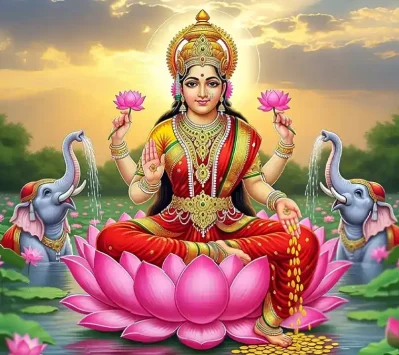
Lakshmi Ji Ki Aarti एक पवित्र स्तुति है जिसमें माँ लक्ष्मी की आराधना की जाती है। Om Jai Lakshmi Mata...