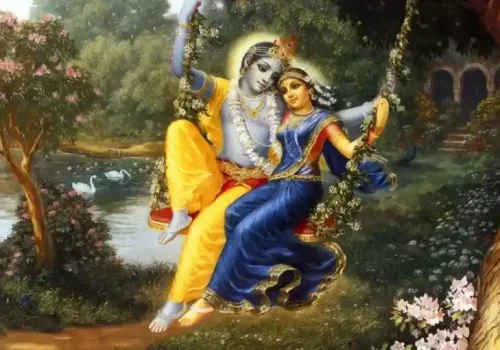
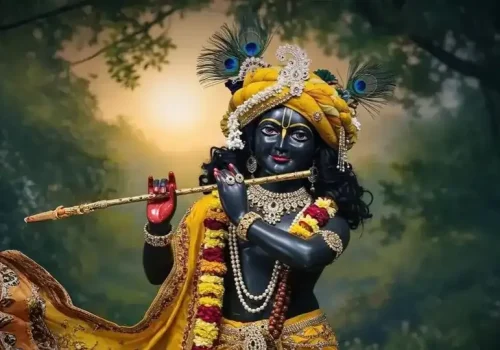
Achyutam Keshavam Lyrics in English: More than just a bhajan, Achyutam Keshavam is a heartfelt expression of love and devotion towards Lord Krishna and Lord Vishnu. Each verse reflects the essence of Bhakti Bhava, which is the pure emotional bond between a devotee and God. Through these soothing words, devotees view Krishna not only as the Supreme Being but also as a friend, a child, a beloved, and a protector. He is someone close to their hearts, not distant in divinity.


Achyutam Keshavam Lyrics | Achyutam keshavam lyrics in english
Achyutam Keshavam Krishna Damodaram
Rama Narayanam Janaki Vallabham
Kaun Kehta Hai Bhagvan Aate Nahi
Tum Meera Ke Jaise Bulate Nahi
Achyutham Keshavam Krishna Damodaram
Rama Narayanam Janaki Vallabham
Kaun Kehta Hai Bhagvan Khaate Nahi
Ber Shabri Ke Jaise Khilate Nahi
Achyutam Keshavam Krishna Damodaram
Rama Narayanam Janaki Vallabham
Kaun Kehta Hai Bhagvan Sote Nahi
Maa Yashoda Ke Jaise Sulate Nahin
Achyutham Keshavam Krishna Damodaram
Rama Narayanam Janaki Vallabham
Kaun Kehta Hai Bhagvan Nachthe Nahi
Gopiyo Ki Tarah Tum Nachathae Nahi
Achyutam Keshavam Krishna Damodaram,
Rama Narayanam Janaki Vallabham,
Naam Japate Chalo Kaam Karte Chalo
Har Samay Krishna Ka Dhyaan Karte Chalo
Achyutham Keshavam Krishna Damodaram,
Rama Narayanam Janaki Vallabham,
Yaad Aayegi Unko Kabhi Na Kabhi
Krishan Darshan To Denge Kabhi Na Kabhi
Achyutam Keshavam Krishna Damodaram
Rama Narayanam Janaki Vallabham
Originally derived from: Achyutashtakam by Adi Shankaracharya
Writer: Unknown (Traditional Composition)
Presented by: Mukti Mantra
Meaning and Essence of Achyutam Keshavam Lyrics
Achutam Keshavam is a beautiful devotional song that honours both Lord Krishna and Lord Rama. It captures the five Bhavas of Bhakti, the different emotions through which devotees connect with the Divine. These are Madhurya Bhava (sweet, romantic love like Meera’s), Vatsalya Bhava (motherly affection like Yashoda’s), Sakhya Bhava (friendly devotion like the Gopis’), Dasya Bhava (humble servitude like Shabari’s), and Shanta Bhava (peaceful remembrance through constant chanting). Each verse of the bhajan shows how God responds not to wealth or rituals, but to genuine love and heartfelt emotion.
Meera’s Madhurya Bhava (Sweet Love):
Meera’s devotion embodies Madhurya Bhava, the emotion of sweet, intimate love between the devotee and the Divine. She doesn’t see Krishna as a distant deity but as her eternal beloved. Her songs and surrender come from a heart that knows no separation. Even in painful moments, her longing transforms into music. This shows that true love for God is both tender and unwavering. Through Meera, we understand that rituals or rules don’t limit divine love; it naturally blossoms when the heart fully surrenders.
Shabari’s Dasya Bhava (Humble Service):
The line “Ber Shabari ke jaise tum khilate nahi” in Achyutam Keshavam refers to one of the most touching moments from Lord Rama’s journey, the pure devotion of Shabari. She waited years for Lord Rama to come, cleaning her small hut and gathering berries each day, believing that one day her Lord would come. When Rama finally arrived, she offered him those berries with trembling hands, but not before tasting each one to ensure that he received only the sweetest berries.
This simple act of Shabari shows the depth of Dasya Bhav, where devotion is expressed through humble and selfless service and love. Shabari was a poor Lady, she couldn’t offer Lord Rama Gold, jewels or anything grand, but her heart was so rooted in devotion to Lord Rama that when she offered him the simple thing, like berries that too already tasted, Lord Rama accepted it with a smile, showing that God does not seek luxury or perfection rather he seeks sincerity in devotion.
This verse in Achyutam Keshavam reminds us that the Divine cherishes even the smallest gesture when done with true faith. It is through this simplicity that Shabari’s offerings became a symbol of love so pure that even the Lord of the Universe couldn’t resist accepting them.
Mother Yashoda’s Vatsalya Bhava (Motherly Affection):
The verse “Maa Yashoda ke jaise sulate nahi” from Achyutam Keshavam beautifully expresses the tender bond between Lord Krishna and Mother Yashoda. Krishna, as a supreme being, doesn’t actually need sleep. Still, Maa Yashoda would sing Lullabies and tell stories and try to make baby Krishna sleep just like any human mother would, so Krishna would act like he was asleep for the benefit of his mother’s maternal affection. However, this sleep was one of his divine lilas always. Due to her love in the form of Vatsalya Bhava, Krishna, the all-powerful Achyuta becomes a playful child resting peacefully in her mother’s lap.
Through this emotion, the bhajan shows that the divine does not seek grand offerings or rituals but genuine affection. Despite witnessing Krishna’s divinity either through his actions or seeing the universe in his mouth, due to Maa Yashoda’s pure maternal love, she continued to see Krishna as her own child who needed her care and affection. And just like Krishna found comfort in Maa Yashoda’s love, he finds joy in the pure devotion of every heart.
The Gopis’ Sakhi Bhava (Playful Friendship):
The line “Gopiyon ke jaise nachate nahi” from Achyutam Keshavam tells about the divine friendship and joyous love that the Gopis shared with Lord Krishna. They didn’t worship him through rituals but rather through laughter, songs and unshaken love. It captures the Sakhi bhava, where one sees the Lord not as a distant deity but rather as their friend, so they treat him as their friend with playfulness and affection.
Gopi’s dance with Krishan under the moonlit sky symbolises the soul’s longing to merge with the divine through love and friendship so pure that it dissolved all separation. Here, Achyutam Keshavam reminds us that spirituality can also bloom through celebration. When devotion is filled with freedom and joy, even God himself becomes part of our dance, accepting our simplest expressions of love as the highest form of worship.
The Bhava of Nishkama Bhakti (Selfless Devotion):
Ultimately, the lines “Naam japate chalo, kaam karte chalo; har samay Krishna ka dhyaan karte chalo” from Achyutam Keshavam convey the essence of selfless devotion, which is to remember God while fulfilling our worldly duties.
Working with sincerity and chanting His name with love turns even the simplest tasks into acts of worship. When devotion is mixed with music, it becomes bhajan; when devotion is mixed with food, every bite becomes prashad; when devotion is joined with hunger, it becomes a fast; when devotion is joined with a journey, it becomes a pilgrimage or a tirath yatra; and when devotion enters a house, it becomes a temple.
The following lines, “Yaad aayegi unko kabhi na kabhi, Krishna darshan to denge kabhi na kabhi,” express unashaken faith that constant remembrance and pure devotion will one day draw the Lord’s grace. Just as Krishna never forgets a devotee’s love, these concluding verses assure us that every prayer and every moment of remembrance brings us closer to him. Here, we are reminded that the path to God is not walked in haste but in steady steps of love, remembrance and faith.
Final Thought:
Ultimately, Achyutam Keshavam teaches that Bhakti is not about viewing God as a distant ruler. Instead, it focuses on building a deep personal connection with Him. When someone begins to see Krishna as their beloved, child, friend, or parent, devotion becomes intimate and vibrant. Love touches the Divine heart more than any showy gifts or rituals. Some devotees see Him as their Sakha (friend). Others view Him as a son, brother, or eternal beloved. In every form, He responds to the sincerity of those feelings. When we begin to see all our relationships mirrored in Him, devotion becomes effortless. God reveals Himself to the heart that loves unconditionally.
Know more about Achyutam Keshavam Bhajan
Here are some common questions people often ask after reading Achyutam Keshavam Lyrics
Lord Krishna is often seen as the eighth avatar of Lord Vishnu.
Meera Bai was a well-known saint of the Bhakti movement, known for her deep devotion to Lord Krishna. Born as a Rajput princess, she viewed Krishna as her true husband and expressed her love through devotional songs called bhajans. She gave up royal life to follow her devotion and faced many challenges along the way. Today, she is remembered as a respected and inspiring figure in India.
Krishna is called Keshav for several reasons:
- Slayer of the demon Keshi: Kansa, Krishna’s uncle, sent the demon Keshi as a horse to kill him. Krishna killed Keshi by strangling him. As a result, he earned the name Keshav, which means “slayer of Keshi.”
- One with beautiful hair: The name also highlights Krishna’s long, flowing hair. This emphasises his charming appearance.
- Lord Vishnu: Keshav is one of the thousand names of Lord Vishnu. Since Krishna is an avatar of Vishnu, this name shows his power as the preserver and protector of the universe.
The name “Damodaram” (or Damodara) means the one whose belly was tied with a rope (from Sanskrit Dama = rope and Udara = belly). It is one of the cherished names of Lord Krishna.
This name comes from a touching story in Krishna’s childhood. His mother, Maa Yashoda, lovingly tied Him to a wooden mortar (ukhal) as a gentle punishment for His mischievous behaviour. Despite His divine power, Krishna allowed Himself to be tied up. This act symbolises the bond of pure motherly love, demonstrating that even the Almighty submits to it.
On a spiritual level, “Damodaram” represents God’s humility and affection. It indicates that divine love transcends power and control. Such love thrives in devotion and surrender.
“Narayanam” is a Sanskrit word that comes from “Narayana,” a name of Lord Vishnu. Narayan, in Sanskrit, refers to the one who lives on the waters. It comes from the words nara, which means water, and ayana, which means resting place or dwelling.
"Janaki Vallabham" means "beloved of Janaki," referring to Lord Rama, who was the husband of Goddess Sita, the daughter of King Janak. The name can be divided into "Janaki" (Sita) and "Vallabham" (beloved). It is also used to describe him as the lord or husband of Sita.
“Achyutam” means “the one who never falls.” The word comes from the Sanskrit root “chyuta,” which means fallen or decayed, and the prefix “a,” which means not. Together, it refers to the infallible, unchanging one, Lord Vishnu or Lord Krishna.
This sacred name describes the divine quality of the Lord who never strays from truth or righteousness. He remains constant amidst change, pure amidst imperfection, and eternal amidst time. Calling Lord Krishna “Achyutam” reminds devotees of His unwavering love, perfection, and divine steadiness. These qualities inspire one to stay firm in faith and devotion, just as He remains steadfast in grace and truth.
Related Posts
- All Posts
- Aarti
- Bhajan
- Chalisa
- Stotram
- Stuti
- Back
- Shiva
- Hanuman
- Shri Radha
- Durga
- Lakshmi
- Back
- Ganesh Ji
- Maha Lakshmi
- Lord Vishnu
- Durga Maa
- Shiva
- Back
- Krishna Bhajan
- Back
- Shri Radha
- Back
- Shri Ram
Shri Ram Janki Lyrics: Shri Ram Janki baithe hai mere seene mein, is a deeply devotional composition that expresses unwavering faith...
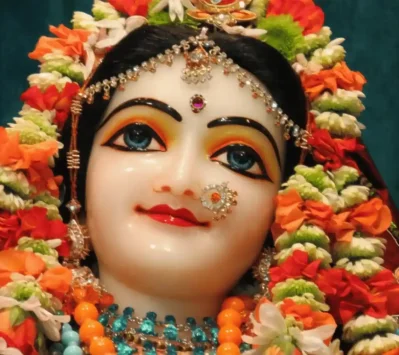
Radha Chalisa- जय वृषभानु कुँवरी श्री श्यामा।कीरति नंदिनी शोभा धामा । नित्य बिहारिनी श्याम अधारा।अमित मोद मंगल दातारा । भक्ति...
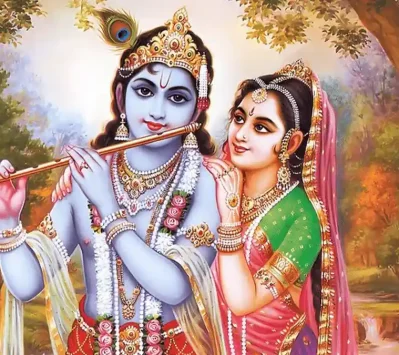
Radha Kripa Kataksh एक पवित्र स्तुति है जिसमें राधा रानी की करुणा और कृपा की याचना की जाती है। इस...