Vishnu ji ki Aarti: ओम जय जगदीश हरे, स्वामी! जय जगदीश हरे आरती। Aarti of Om Jai Jagdish Hare यह ओम जय जगदीश हरे आरती भगवान विष्णु को समर्पित सबसे लोकप्रिय प्रार्थनाओं में से एक है। Om Jai Jagdish Hare Aarti श्रद्धा और भक्ति भाव से मंदिरों एवं घरों में गाई जाती है। यह Vishnu ji ki Aarti पंडित श्रद्धाराम फिल्लौर द्वारा 19वीं शताब्दी में रचित है और आज भी लाखों भक्त प्रतिदिन इसका पाठ कर आशीर्वाद, शांति और ईश्वरीय कृपा प्राप्त करते हैं।
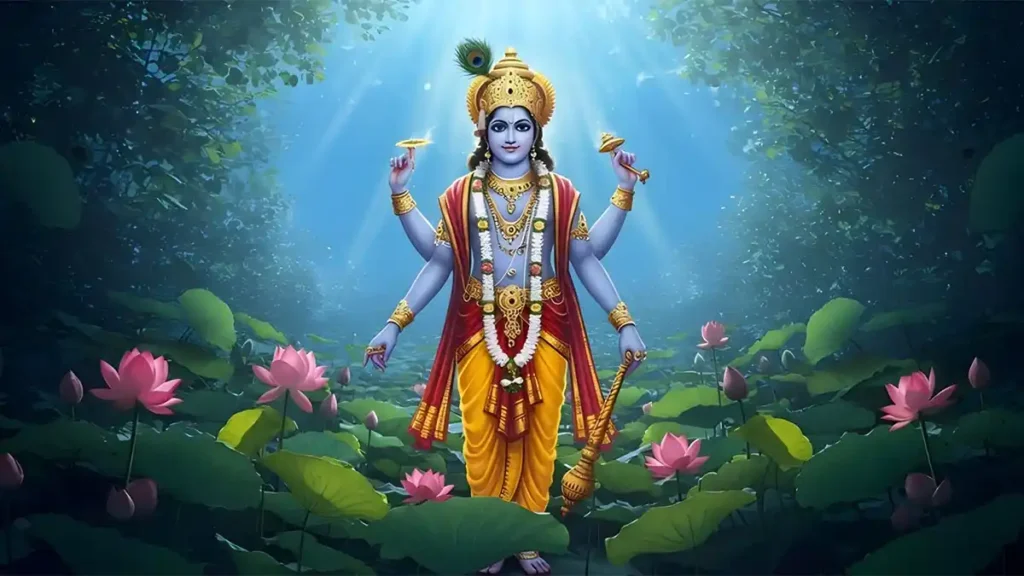
Vishnu Ji Ki Aarti (Aarti of Om Jai Jagdish Hare)
ओम जय जगदीश हरे , स्वामी!
जय जगदीश हरे।
भक्त जनों के संकट, क्षण में दूर करे॥
ओम जय जगदीश हरे।
जो ध्यावे फल पावे, दुःख विनसे मन का।
स्वामी दुःख विनसे मन का।
सुख सम्पत्ति घर आवे, कष्ट मिटे तन का॥
ओम जय जगदीश हरे।
मात-पिता तुम मेरे, शरण गहूं मैं किसकी।
स्वामी शरण गहूं मैं किसकी।
तुम बिन और न दूजा, आस करूं जिसकी॥
ओम जय जगदीश हरे।
तुम पूरण परमात्मा, तुम अन्तर्यामी।
स्वामी तुम अन्तर्यामी।
पारब्रह्म परमेश्वर, तुम सबके स्वामी॥
ओम जय जगदीश हरे।
तुम करुणा के सागर, तुम पालन-कर्ता।
स्वामी तुम पालन-कर्ता।
मैं मूरख खल कामी, कृपा करो भर्ता॥
ओम जय जगदीश हरे।
तुम हो एक अगोचर, सबके प्राणपति।
स्वामी सबके प्राणपति।
किस विधि मिलूं दयामय, तुमको मैं कुमति॥
ओम जय जगदीश हरे।
दीनबन्धु दुखहर्ता, तुम ठाकुर मेरे।
स्वामी तुम ठाकुर मेरे।
अपने हाथ उठाओ, द्वार पड़ा तेरे॥
ओम जय जगदीश हरे।
विषय-विकार मिटाओ, पाप हरो देवा।
स्वमी पाप हरो देवा।
श्रद्धा-भक्ति बढ़ाओ, संतन की सेवा॥
ओम जय जगदीश हरे।
श्री जगदीशजी की आरती, जो कोई नर गावे।
स्वामी जो कोई नर गावे।
कहत शिवानन्द स्वामी, सुख संपत्ति पावे॥
ओम जय जगदीश हरे।
भगवान विष्णु की जय… माता लक्ष्मी की जय…
Written by: Pandit Shraddharam Phillauri
Presented By: Mukti Mantra
Also Read: Lakshmi Mata Aarti
The Deeper Meaning of Vishnu Ji ki Aarti - Om Jai Jagdish Hare
Aarti of Om Jai Jagdish Hare reflects the journey of devotion through three stages of bhakti. These are surrender, realisation of his true form and asking for liberation. Each stage represents a step forward in the spiritual growth of devotees. The Vishnu Ji ki Aarti is a reminder that devotion is not a moment of worship but a lifelong evolution of the heart.
Stage 1: Surrender in the Aarti of Om Jai Jagdish Hare
“Maat pita tum mere, sharan main kiski jaun…”
The verses express the devotee’s complete surrender. The devotee sees him as his father, friend, and their entire world. When a person truly understands God’s presence in everyone, their fear and pride both fade away. They show complete surrender to Lord Vishnu.
Here, the relationship between devotee and God goes beyond rituals and ceremonies. This is the foundation of bhakti: trust and surrender. We often turn to God only in times of need, but this verse is a constant reminder to lean on His strength, not only in difficult times but also to thank him in good times. When we accept that Lord Vishnu guides every joy and sorrow, life feels less of a struggle and more of a journey.
Moreover, it reminds us that faith doesn’t mean weakness; it means resting our worries on the one who never lets us fall. Dependence on God is not escape but rather liberation from the illusion that we can control everything. This initial surrender then paves the way for the Realisation of Divine Presence.
Stage 2: Realisation in the Aarti of Om Jai Jagdish Hare
“Tum Puran Parmatma, tum Antaryami…”
After expressing love, trust and surrender, the devotee now moves toward the realisation of who Vishnu truly is. He is “Puran Parmatma”, the Complete, Perfect, Eternal Being and “Antaryami”, the One who lives within every heart, silently witnessing all that happens.
Here, the devotee shifts from emotion to understanding; he begins to see that God is not limited to temples, idols and rituals; he exists in every breath, in every living being. The same Vishnu who holds the Sudarshan Chakra also resides as consciousness in each of us.
This understanding also teaches us humility, as when we recognise that the Divine exists in everyone, we naturally develop respect, compassion and patience. This realisation turns worship inward; instead of searching for God outside, we begin to purify our thoughts, knowing that each good action honours Vishnu within.
It reminds us that God is not far away; he’s the quiet strength within us. In this stage, the devotee reaches the second level of bhakti, the stage of realisation. Following this profound awareness, the final stage is marked by the Final Prayer for Purity.
Stage 3: Purification in the Aarti of Om Jai Jagdish Hare
“Vishay-vikar mitao, paap haro Deva…”
After complete surrender to god and realisation of his presence within oneself, instead of material wealth, the devotee now asks for liberation from his sins, ego and desires. This represents the third and final stage of bhakti, characterised by purification and selfless devotion.
The words “vishay-vikar” refer to impurities that disturb the mind, greed, anger, jealousy, attachment and everything that keeps us away from our true self. Here, the devotee humbly requests Lord Vishnu to purify his soul from within and make him worthy of serving other people. This shows how genuine devotion leads to humility and service.
When our hearts are pure, the soul naturally moves towards compassion. Finally, the Aarti ends on this note of transformation, teaching that the ultimate blessing isn’t wealth or fame, but inner peace and purity
Journey of the Soul in Devotion
When chanted with complete awareness, the Vishnu Ji ki Aarti becomes a spiritual roadmap. Starting from complete devotion and surrender, it deepens into the awareness that God resides within, and concludes in the selfless service of others. Each repetition purifies the mind, dissolves pride, and brings us closer to eternal truth. Chanting ‘Om Jai Jagdish Hare’ with true feeling is a prayer not asking for more, but to become more—more patient, more grateful, and more compassionate—thus transforming our lives into a constant act of worship.
Know more about Lord Vishnu
Here are some common questions people often ask about Lord Vishnu after reading the Aarti of Om Jai Jagdish Hare
The first avatar of Lord Vishnu was Matsya, the fish. In this form, he saved the Vedas and humanity from a great flood and the demon Hayagriva. Matsya, an incarnation of Lord Vishnu, warned King Manu about the impending flood. He advised King Manu to build a boat to preserve life and seeds for the creation of a new universe. Subsequently, he guided the vessel safely through the storm.
Lord Vishnu is shown in blue to represent the infinite and cosmic nature of the universe. Blue as a colour represents the endless sky and the vast ocean, both of which appear limitless to the human eye. Similarly, Lord Vishnu is everywhere, timeless, and fills all things. Blue also symbolises calmness, stability, and depth. These qualities show Lord Vishnu’s role in protecting and maintaining all of creation.
Blue also represents Satva Guna, the energy of purity, goodness and wisdom. Vishnu, as preserver, embodies this satvic energy.
Narayan, in Sanskrit, refers to the one who lives on the waters or, more deeply, the ultimate refuge for all souls. It comes from the words nara, which means water, and ayana, which means resting place or dwelling.
In a deeper sense, 'Nara' is also interpreted as the human being or the collective body of souls, and 'Ayana' means the ultimate goal. Thus, Narayan also represents the ultimate refuge or destination for all souls.
The name of Lord Vishnu's snake is Sheshnaag, also known as Ananta, means endless. He is the thousand-hooded divine serpent who forms the holy bed for Lord Vishnu. Vishnu Ji is often shown resting on Sheshnaag in the cosmic ocean. This image symbolises eternity, stability, and the endless nature of creation.
Goddess Lakshmi is the wife of Lord Vishnu. She is honoured as the goddess of wealth, fortune, and prosperity. Although Vishnu is sometimes depicted with Sridevi, Bhudevi, and Niladevi, these figures are viewed as different forms of Lakshmi rather than distinct goddesses.
Lakshmi Mata is depicted at the feet of Lord Vishnu because she represents service, devotion, and humility. While Vishnu Ji represents Dharma, Lakshmi Ji represents material prosperity or wealth. Her position at his feet symbolises that wealth must always be governed by dharma to be beneficial and not destructive.
Her presence at his feet also demonstrates her deep love and respect for him. It also reminds us that true wealth comes from serving the divine. This is why, during prayers like Vishnu ji ki Aarti, devotees often acknowledge both Vishnu ji and Lakshmi Mata together, as they are always connected.
According to the stories, Lakshmi Mata is always at the feet of Lord Vishnu and constantly cleans them to ward off Alakshmi, the goddess of misfortune. By remaining at his feet, she ensures that prosperity, peace, and good fortune stay with those who worship Vishnu sincerely.
Lakshmi Narayan Yog is a significant Vedic astrological formation that occurs when the planets Venus (Shukra) and Mercury (Budh) come together in a birth chart. This combination is a kind of Raja Yoga. It is thought to bring individuals great wealth, prosperity, fame, success, and luxury. This happens by merging the intelligence and business skills of Mercury with the wealth and comfort symbolised by Venus.
Related Posts
- All Posts
- Aarti
- Bhajan
- Chalisa
- Stotram
- Stuti
- Back
- Shiva
- Hanuman
- Shri Radha
- Durga
- Lakshmi
- Back
- Ganesh Ji
- Maha Lakshmi
- Lord Vishnu
- Durga Maa
- Shiva
- Back
- Krishna Bhajan
- Back
- Shri Radha
- Back
- Shri Ram
Radhe Radhe Bol Shyam Aaegye Lyrics in English and Hindi: The bhajan “Radhe Radhe Bol Shyam Aayenge” expresses a beautiful...
Satguru Mai Teri Patang is a devotional bhajan rooted in the imagery of a kite and its string, known as...
Shri Ram Janki Lyrics: Shri Ram Janki baithe hai mere seene mein, is a deeply devotional composition that expresses unwavering faith...