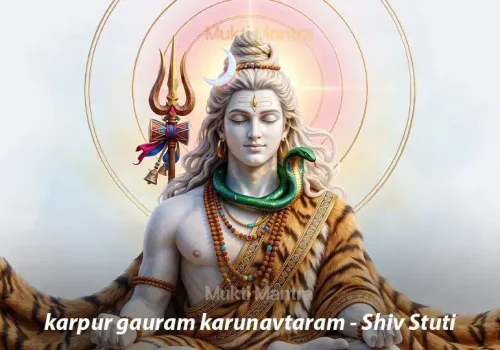
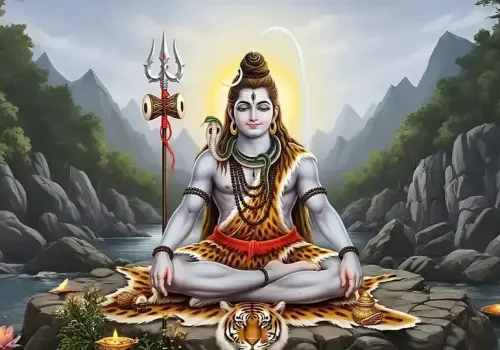
Shiv Tandav Stotram Lyrics

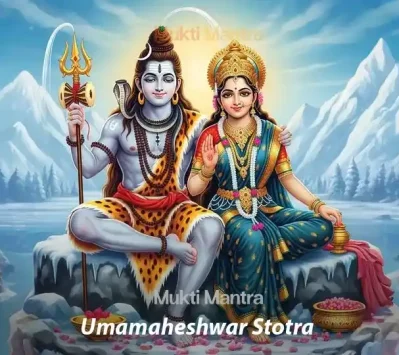
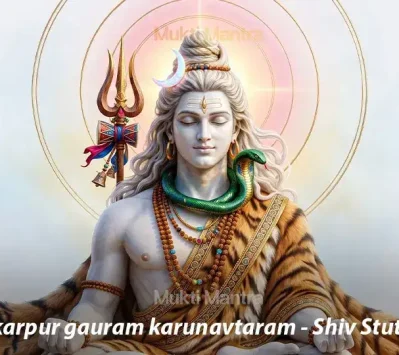
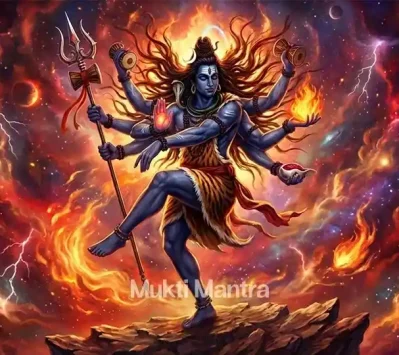
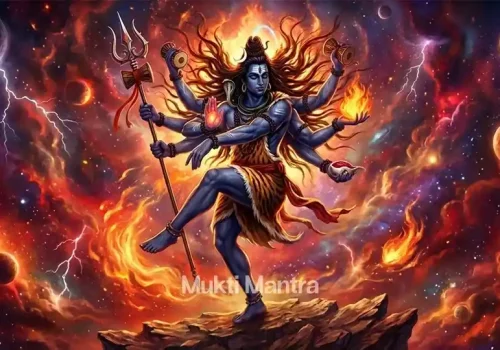
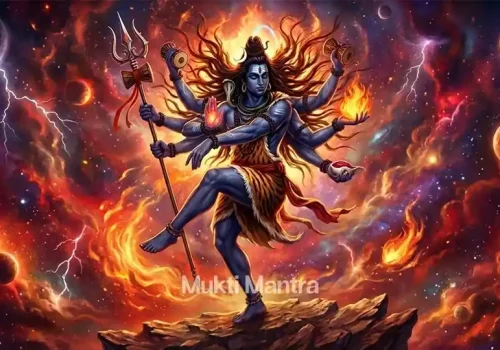
Shiv Tandav Stotram Lyrics with meaning: Jatāṭavī-gala-jjala-pravāha-pāvita-sthale Gale’valambya lambitāṃ | It is one of the most powerful and visually striking hymns dedicated to Lord Shiva. Composed by Ravana, a deeply devoted worshipper of Shiva. This Stotram beautifully portrays the fierce and majestic form of the Lord performing tandava.
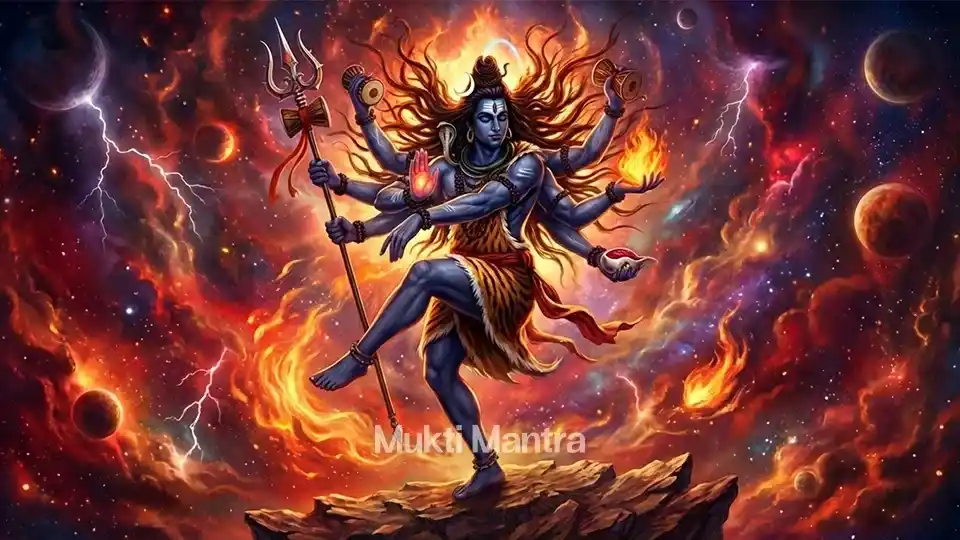
Shiv-tandav-stotram-lyrics-mukti-mantra

Read the Shiv Tandav Stotram Lyrics:

Jatāṭavī-gala-jjala-pravāha-pāvita-sthale
Gale’valambya lambitāṃ bhujanga-tuṅga-mālikām।
Ḍamaḍ ḍamaḍ ḍamaḍ ḍama-nnināda-vaḍḍa-marvayaṃ
Chakāra chaṇḍa-tāṇḍavaṃ tanotu naḥ Śivaḥ śivam ||1||

Jatā-kaṭāha-sambhrama-bhraman-nilimpa-nirjharī
Vilola-vīchi-vallari-virājamāna-mūrdhani।
Dhagad-dhagad-dhagaj-jvalal-lalāṭa-paṭṭa-pāvake
Kishora-chandra-śekhare ratiḥ pratikṣaṇaṃ mama ||2||

Dharādhara-indra-nandinī-vilāsa-bandhu-bandhura
Sphurat-diganta-santati-pramoda-māna-mānase।
Kṛpā-kaṭākṣa-dhoraṇī-niruddha-durdharāpadi
Kvacid-digambare mano vinodam-etu vastuni ||3||

Jatā-bhujanga-piṅgala-sphurat-phaṇā-maṇi-prabhā
Kadamba-kuṅkuma-drava-pralipta-dig-vadhū-mukhe।
Madāndha-sindhu-rasphurat-tvag-uttarīya-medure
Mano vinodam-adbhutaṃ bibhartu bhūta-bhartari ||4||

Sahasra-lochana-prabhṛtya-śeṣa-lekha-śekhara
Prasūna-dhūli-dhoraṇī-vidhūsarāṅghri-pīṭha-bhūḥ।
Bhujanga-rāja-mālayā nibaddha-jāta-jūṭakaḥ
Śriyai chirāya jāyatāṃ chakora-bandhu-śekharaḥ ||5||

Lalāṭa-chatvara-jvalad-dhanañjaya-sphuliṅga-bhā
Nipīta-pañca-sāyakaṃ naman-nilimpa-nāyakam।
Sudhā-mayūkha-lekhayā virājamāna-śekharaṃ
Mahā-kapāli-sampade śiro-jaṭālam-astu naḥ ||6||

Karāla-bhāla-paṭṭikā-dhagaddha-gaddha-gajjvala
Dhanañjaya-āhutīkṛta prachaṇḍa-pañcha-sāyake।
Dharādhara-indra-nandinī-kuchāgra-chitra-patraka
Prakalpanaika-śilpinī trilochane ratir mama ||7||

Navīna-megha-maṇḍalī-niruddha-durdhara-sphurat
Kuhū-niśīthini-tamaḥ prabandha-baddha-kandharaḥ।
Nilimpa-nirjharī-dharaḥ stanotu kṛtti-sindhuraḥ
Kalā-nidhāna-bandhuraḥ śriyaṃ jagad-dhurandharaḥ ||8||

Praphulla-nīla-paṅkaja prapañcha-kālima-prabhā
Valambi-kaṇṭha-kandalī-ruchi-prabaddha-kandharam।
Smarachchhidaṃ purachchhidaṃ bhavachchhidaṃ makhachchhidaṃ
Gajachchidāndhaka-chchhidaṃ tam-antaka-chchhidaṃ bhaje ||9||

Akharva-sarva-maṅgalā-kalā-kadamba-mañjarī
Rasa-pravāha-mādhurī-vijṛmbhaṇā-madhuvratam।
Smarāntakaṃ purāntakaṃ bhavāntakaṃ makhāntakaṃ
Gajāntakāndhaka-kāntakaṃ tam-antaka-kāntakaṃ bhaje ||10||

Jayatv-ad-abhravibhrama-bhramad-bhujanga-maśvasan
vinir-gamat-krama-sphurat-karāla-bhāla-havyavāṭ।
Dhimid-dhimid-dhimid-dhvanan-mṛdaṅga-tuṅga-maṅgala
Dhvanikrama-pravartita-prachaṇḍa-tāṇḍavaḥ Śivaḥ ||11||

Dṛṣad-vichitra-talpayor-bhujanga-mauktika-srajor
Gariṣṭha-ratna-loṣṭhayoḥ suhṛd-vipakṣa-pakṣayoḥ।
Tṛṇāravinda-chakṣuṣoḥ prajā-mahī-mahendra-yoḥ
Samaṃ pravartayan-manaḥ kadā sadāśivaṃ bhaje ||12||

Kadā nilimpa-nirjharī-nikuñja-koṭare vasanh
Vimukta-dur-matiḥ sadā śiraḥ-stham-añjaliṃ vahan।
Vilola-lochano lalāma-bhāla-lagnakaḥ
Śiveti mantram-uccharan kadā sukhī bhavāmy-aham ||13||

Idmaṃ hi nityaṃ eva mukta-muktam-ottamaṃ stavam
Paṭhan-smaran bruvan-naro viśuddhim-eti santatam।
Hare gurau subhaktim-āśu yāti nānyathā gatiṃ
Vimohanaṃ hi dehināṃ suśaṅkarasya chintanam ||14||

Pūjāvasānasamaye daśavaktra-gītaṁ yaḥ
Śambhupūjana-paraṁ pradadati pradoṣe ।
Tasya sthirāṁ rathagajendraturaṅgayuktāṁ
Lakṣmīṁ sadaiva sumukhīṁ pradatāti Śambhuḥ ||15||

Aum Namah Shivay !!

Written by: Traditionally belived to be composed by Ravana
Presented By: Mukti Mantra

Understand the meaning of Shiv Tandav Stotram Lyrics:

Understanding the Shiv Tandav Stotram Lyrics requires more than a simple translation. The hymn is layered with poetic symbolism, spiritual philosophy, and intense devotion using the poetic meter “pancha chamram”. To help readers grasp its depth, we break each shloka into smaller parts, where the main layer conveys the central idea, and the sub-layers explain the deeper meaning behind each phrase. This structured explanation allows devotees not only read the stotram but also to understand its spiritual essence.

Verse -1 of the Shiv Tandav Stotram Lyrics

First, let’s break the verse into smaller subsections and understand their meaning:

  • Jatāṭavī – Forest-like matted locks (Shiva’s jata)
  • Gala-jjala-pravāha – The flowing stream of water
  • Pāvita-sthale The place purified by it
  • Gale’valambya Hanging around His neck
  • Bhujanga-tuṅga-mālikām A long, lofty garland of serpents
  • Ḍamaḍ ḍamaḍ ḍamaḍ ḍama-nnināda-vaḍḍa-marvayaṃ the sound of Damru
  • Chakāra chaṇḍa-tāṇḍavaṃ
  • tanotu naḥ Śivaḥ śivam

The central idea of the verse lies in the phrase “Chakāra chaṇḍa-tāṇḍavaṃ.” describing Lord Shiva as the one who performed the fierce and rapid dance, tandava. It is further described that he performed tandava at a place that is purified by the holy water, Ganga, from forest like matted locks of lord shiva, with a garland of long snakes supporting around his neck and with a damru in his hand, rapidly moving and creating the sound of “Damad damad damad daman.” The key idea is further elaborated in the phrase “tanotu naḥ Śivaḥ śivam”, as it conveys that may this form of Lord Shiva surround us with auspiciousness.

Verse - 2 of the Shiv Tandav Stotram Lyrics

Dividing the Shloka into sub-parts, its meaning is as follows: 

  • Jatā-kaṭāha – matted locks of Lord Shiva’s hair are formed like a container
  • sambhrama-bhraman nilimpa-nirjharī – swirling in a frenzy the river of celestial beings, ganga here
  • Vilola-vīchi-vallari-virājamāna –turbulant and spilling ripples
  • mūrdhani – top area of the head
  • Dhagad-dhagad-dhagaj-jvalal – bright shining fire
  • lalāṭa-paṭṭa-pāvake – fire on the surface of Lord Shiva’s head
  • Kishora-chandra-śekhare – moon on Lord Shiva’s hair
  • ratiḥ pratikṣaṇaṃ mama – I find eternal pleasure

In the second verse, the focus shifts primarily to Lord Shiva’s head and the powerful movement created during his tandava. His matted lock (jata) is described as being tied like a container (Jatā-kaṭāha), holding the celestial river Ganga within it. As he performs tandava, the sacred water swirls intensely, creating restless ripples across the top of his head, referred to as “mūrdhani”.

At the same time, the fire of his third eye burns brightly on his forehead. Words like “Dhagad-dhagad” are used to portray the intensity of the flames. At the same time, the moon god, Chandra, in the shape of a crescent moon, referred to as Kishora-chandra-śekhare, is resting peacefully at his head, in contrast to the fierce energy of Lord Shiva.

Ravana concludes by expressing his devotion in the phrase “ratiḥ pratikṣaṇaṃ mama”, saying he finds constant joy in this magnificent form of Lord Shiva, in the swirling Ganga, the blazing third eye and the crescent moon adorning his hair. When a devotee chants the Shiva Tandav Stotram lyrics, it is not only the bhav of Ravana; it also becomes the bhav of the devotee chanting it.

Verse -3 of the Shiv Tandav Stotram Lyrics

In this Shloka of the Shiv Tandav Stotram Lyrics, there’s a slight shift in structure compared to the earlier verses. Instead of building a single continuous flowing image, the phrases describe different aspects that together form a complete devotional vision. Let’s see the meaning of the verse by breaking it into sub-sections first:

  • Dharādhara-indra-nandinī – daughter of the king of mountains, Maa Parvati
  • vilāsa-bandhu- dance partner ban-dhuras – overflowing with joy
  • Sphurat- a loving glance
  • Diganta-santati- spread in all directions
  • pramoda-māna-mānase – happy state of mind
  • Kṛpā-kaṭākṣa-dhoraṇī – compassionate glance
  • durdharāpadi – unbearable troubles
  • Kvacid-digambare – in lord shiva’s clothing, open to all directions
  • mano vinodam-etu vastuni – may my mind find joy

The verse begins by describing Lord Shiva as the joyful dance partner “vilāsa-bandhuras” of the Daughter of the King of the Mountains, Maa Parvati. Their divine union fills him with overflowing joy. The next phrase, “Sphurat-diganta-santati-pramoda-māna-mānase,” portrays His mind as radiant and blissful, with happiness spreading in all directions like expanding light.

Then, Shiva’s compassionate glance, his loving and merciful gaze, referred to as “kṛpā-kaṭākṣa”, is praised, and it is said that with his even one gaze, filled with compassion, even the most unbearable troubles become bearable. His compassion has the power to remove one’s suffering completely.

At last, the stotram concludes by bringing it all together as the devotee says that may his mind find joy and delight in Lord Shiva, in his divine form as Digambara, in his merciful glance, and in his joyful state of mind, which is joyful by being the dance partner of Maa Parvati.

Verse - 4

In this verse, the Shiv Tandav Stotram Lyrics once again capture intense motion. Let’s understand the word-by-word meaning by dividing it into sub-sections first:

  • Jatā-bhujanga – the serpents resting in Lord Shiva’s matted locks
  • Piṅgala-sphurat-phaṇā-maṇi-prabhā – the reddish glow radiating from the shining jewels on their hoods
  • Kadamba-kuṅkuma-drava-pralipta – appearing as if smeared with liquid vermilion (kumkum)
  • Dig-vadhū-mukhe – on the faces of the brides of the directions (all directions compared to a bride’s face)
  • Madāndha-sindhu-rasphurat-tvag-uttarīya – the shining upper garment made from the skin of an intoxicated elephant
  • Medure – soft, rich, and majestic
  • Mano vinodam-adbhutam – may my mind experience wondrous joy
  • Bibhartu bhūta-bhartari – in the Lord who sustains all creation

The snakes on the top of Lord Shiva’s head are swaying in frenzy as he performs tandava. As they move, the radiant copper coloured jewels on their hoods are glowing, scattering the streaks of light in all directions.

These reddish rays spread across the sky, making the directions themselves appear like the face of a bride adorned with fresh vermilion, referred to as kumkum. Here, Ravana poetically compares the glowing directions to a newlywed bride whose forehead is beautifully decorated with a red streak of vermillion, and says that may his mind find joy looking at that bride’s face.

At the same time, Shiva is described wearing an upper garment made from the soft and shining skin of a wild, intoxicated elephant, adding to the grandeur of his form even amid the wildness of the dance

The verse concludes with a devotional prayer: may my mind hold wondrous joy in the sustainer of all beings, in his majectic form, in the softness of his radiant garment, and in the strreaks of light emanating from the jewela on top of hoods of snakes decorating lord Shiva’s hair, which are falling in all directions making them look like a brides’s face adorned in kunkumada.

Verse - 5

The layer-by-layer meaning of this Shloka is as follows:

  • Sahasra-lochana-prabhṛtya – beginning with the thousand-eyed one (Indra) and others
  • Śeṣa-lekha-śekhara – including all other gods who bow their crowned heads
  • Prasūna-dhūli-dhoraṇī-vidhūsara-āṅghri-pīṭha-bhūḥ – the ground at His feet covered and sanctified by the dust of flower offerings
  • Bhujanga-rāja-mālayā – by a garland made of the king of serpents
  • Nibaddha-jāta-jūṭakaḥ – whose matted locks are firmly tied together
  • Śriyai chirāya jāyatām – may He grant us eternal prosperity and auspiciousness
  • Chakora-bandhu – the one who holds the moon (beloved of the chakora bird) upon His head
  • śekharaḥ –  A name of Lord Shiva

In this part of the Shiv Tandav Stotram Lyrics, Ravana describes Lord Shiva as the supreme deity before whom even the greatest gods, like the thousand-eyed Indra, bow. The dust of the flowers they offer settles around his feet, making the ground near his lotus feet sacred and fragrant.

Shiva’s matted locks are beautifully bound together by a garland of the king of serpents, symbolising his mastery over the most powerful and fearsome forces. Upon his head shines the moon, the friend of the Chakora bird. Here, the moon is used as a symbol referring to Chandra dev. The glowing moon not only enhances his beauty but also represents coolness and peace.

The verse concludes with a prayer that, may Lord Shiva, crowned with moon, adorned with serpents, worshipped by all gods, and sanctified by showers of flowers at his feet, grant us eternal prosperity and lasting auspiciousness.

Verse -6

In this Shloka of the Shiv Tandav Stotram, we will not divide the meaning into sublayers, because the structure is highly compact and interwoven. Instead, we will focus on the central idea contained in the very last phrase, “Mahā-kapāli-sampade śiro-jaṭālam-astu naḥ.”

This line expresses the core prayer of the verse: may our heads bow in reverence to that glorious Lord, the great Kapali, meaning the one who holds the skull, whose matted locks crown his divine form.

The starting phrases describe Lord Shiva’s magnificent form in detail. “Lalāṭa-chatvara-jvalad-dhanañjaya-sphuliṅga-bhā” portrays the blazing fire burning in the middle of his forehead, from his third eye. This fire is so powerful that it reduced Kamdeva, the Lord of five arrows, to ashes as stated in “Nipīta-pañca-sāyakam”. Referring back to the story, according to the Shiv Purana, Lord Shiva burned Kamadeva (the god of love/desire) with his third eye because Kamadeva interrupted his deep meditation to induce lust, acting on behalf of other gods to break his penance, or Samadhi, for the sake of defeating a demon. This symbolises his absolute control over desire and worldly attachment.

Then, it is said that they bow down to the supreme lord of all celestial beings, before whom even the gods bow down, in the lines “Naman-nilimpa-nāyakam”, where “naman” means to bow down and “nilimpa-nāyakam” means the lord of all celestial beings. This is also why he is called Mahadeva.

At the same time, “Sudhā-mayūkha-lekhayā virājamāna-śekharam” presents a contrasting image. At his head, the cool, nectar-like crescent moon shines beautifully, contrasting with the fiery third eye burning on his forehead.

Overall, this Shloka brings together a very powerful image. It says, in the glory of the Lord, the Mahakapali, may our heads be prayerful towards Mahadeva, towards the one who devoured the lord of five arrows, Manmatha, with the embers burning in the middle of his forehead, and towards the one whose head is decorated by the nectar-like crescent moon.

Verse -7

Let’s understand the word-by-word meaning of this Shloka first:

  • Karāla-bhāla-paṭṭikā – from the fierce forehead (the third eye of Shiva)
  • Dhagaddha-gaddha-gajjvala – blazing with intense and enormous radiance
  • Dhanañjaya-āhutīkṛta prachaṇḍa-pañcha-sāyake – the one who reduced the powerful lord of five arrows (Kamadeva/Manmatha) to ashes in that fire
  • Dharādhara-indra-nandinī – of Devi Parvati, the daughter of the King of Mountains
  • Kuchāgra-chitra-patraka – whose bosom is like a canvas for divine artistry
  • Prakalpanaika-śilpinī – the unique artist of creation
  • Trilochane – in the three-eyed Lord
  • Ratiḥ mama – I find my delight

In this Shloka of the Shiv Tandav Stotram, the central idea lies in the phrase, “Trilochane ratir mama”, meaning, I find pleasure in the three-eyed lord, Trilochan, being another name of Lord Shiva. We will further divide the verse into two contrasting layers to describe how this delight arises.

In the first layer, Ravana speaks of “Dharādhara-indra-nandinī-kuchāgra-chitra-patraka prakalpanaika-śilpinī.”Here, Lord Shiva is portrayed as the unique artist of creation, using the bosom of Devi Parvati, the daughter of the King of the mountains, as the divine canvas of cosmic creativity. Here, the third eye represents perception. It is the eye through which the universe is envisioned and manifested in union with Shakti. This is Shiva as the supreme creator, engaged in divine artistry.

In the second layer, Ravana describes “Karāla-bhāla-paṭṭikā-dhagaddha-gaddha-gajjvala dhanañjaya-āhutīkṛta prachaṇḍa-pañcha-sāyake.” This refers to the same third eye blazing fiercely on his forehead, whose fire reduced Kamdeva to ashes. Here, the third eye symbolises dispassion, the power that destroys desire and worldly disturbance.

The contrast is striking. In one aspect, the third eye is portrayed as the vision of divine creation with Shakti, and on another, it is the fire that burns desire itself. Through this, Ravana conveys a profound truth: the divine nature is not limited. Shiva is both creator and destroyer, both the artist of love and the ascetic beyond desire.

Here, Ravana declares that he finds pleasure in that three-eyed lord whose nature transcends all limitation. In the one who is fierce yet creative, detached yet deeply united with shakti.

Verse - 8

The word-by-word meaning of this Shloka is as follows:

  • Navīna-megha-maṇḍalī-niruddha-durdhara-sphurat – dark and radiant like a cluster of newly formed rain clouds
  • Kuhū-niśīthini-tamaḥ – darker than the deep darkness of the new moon night (Kuhu Amavasya)
  • Prabandha-baddha-kandharaḥ – whose neck is firmly adorned with a serpent
  • Nilimpa-nirjharī-dharaḥ – the one who holds the celestial river Ganga
  • Stanotu – may He bestow
  • Kṛtti-sindhuraḥ – the one clad in the hide of an elephant
  • Kalā-nidhāna-bandhuraḥ – the Lord who is the abode and treasure of all arts
  • Śriyam – prosperity and auspiciousness
  • Jagad-dhurandharaḥ – the one who upholds and sustains the universe

The central prayer of this Shloka lies in the phrase “Śriyam stanotu”, meaning may he bestow prosperity upon us. Here, Ravana invokes blessings from Lord Shiva by describing his majestic and awe-inspiring form.

He portrays Lord Shiva as dark and radiant like a mass of newly formed rain clouds and even deeper in hue than the darkness of the new moon night of “Kuhu.” This comparison is not a portrayal of the complexion of Lord Shiva but rather implies the divine depth and infinite vastness.

His neck is adorned with a serpent, as said in the line “Prabandha-baddha-kandharaḥ” symbolising his power and fearlessness. Upon his head flows the celestial river Ganga, and he is clad in the rugged skin of an elephant, representing victory over ego and pride.

He is also called “Kalā-nidhāna-bandhuraḥ,” meaning the very abode of all arts and refined expressions of creation. Despite his fierce ascetic appearance, he remains the source of beauty, music, knowledge, and creativity. Above all, He is “Jagad-dhurandharaḥ,” meaning the one who bears and sustains the entire universe.

Thus, in this particular Shloka, Ravana prays that may the supreme Lord, dark as rain clouds, adorned with serpents, crowned with the gana, clothed in elephant hide, treasurer of all arts, and sustainer of all creation, bless us with lasting prosperity and auspiciousness.

Verse - 9

This Shloka begins by describing Lord Shiva’s majestic form and then glorifies him as the destroyer of multiple layers of illusion, ego, and ignorance. Let’s understand the meaning of this Shloka in sub-layers first:

  • Praphulla-nīla-paṅkaja like a fully blossomed blue lotus
  • Prapañcha-kālima-prabhā – the dark radiance of the vast universe (cosmic blackness)
  • Valambi-kaṇṭha-kandalī-ruchi-prabaddha-kandharam whose neck, resembling the smooth trunk of a plantain tree, is adorned and bound by a hanging serpent
  • Smarachchhidam the destroyer of Smara (Kamadeva, the god of desire)
  • Purachchhidam – the destroyer of the three cities (Tripurasura)
  • Bhavachchhidam the destroyer of worldly existence and the illusion of individuality
  • Makhachchhidam the destroyer of Daksha’s yajna (sacrifice performed without proper devotion)
  • Gajachchidam – the destroyer of the demon Gajasura
  • Andhakachchhidam the destroyer of Andhakasura, the embodiment of ignorance
  • Tam-antaka-chchhidam – the destroyer of Antaka (Yama, the god of death)
  • Tam bhaje – I worship and praise that Lord

The ninth Shloka of the Shiva tandav Stotram lyrics begins with “Praphulla-nīla-paṅkaja prapañcha-kālima-prabhā.” Here, Lord Shiva’s appearance is compared to a fully blossomed blue lotus and to the deep, dark radiance of the cosmic universe itself. Next, his neck is compared to the smooth trunk of a plantain tree, around which a serpent, Vasukhi, hangs gracefully as described in “Valambi-kaṇṭha-kandalī-ruchi-prabaddha-kandharam.”

The second half of the Shloka repeatedly uses the word “chchhidam”, meaning the destroyer. Ravana praises Shiva as the destroyer of Kamadeva, who represents desire and thus calls him “Smarachchhidam.” Then he calls him “Purachchhidam” meaning the destroyer of Tripurasur, who was the embodiment of three worldly illusions that one lives in his own head, and the destroyer of bhava, illusion of a separate individual existence as “Bhavachchhidam”.

As “Makhachchhidam”, he is the destroyer of Daksha’s yajna that was conducted without right intent, and as Gajachchidām, he is the one who destroys demon Gajasaura and wears his skin. He even destroyed Antaka (Yama) when he tried to forcibly take the life of His devotee Markandeya, making him “antaka-chchhidam”.

Through this repetition, the verse emphasises Shiva as the ultimate remover of illusion at every level, desire, ego, pride, ignorance, death, and false rituals. Ravana concludes with “Tam bhaje”, meaning I worship that Lord.

Verse - 10

Let’s understand the meaning of this Shloka by dividing it into sub-parts first. Since the meaning of the last two verses remain same, we are only explaining the first two verses below:

  • Akharva-sarva-maṅgalā the infinitely magnificent and all-auspicious Goddess Parvati
  • Kalā-kadamba-mañjarī the cluster of many beautiful flower-like arts adorning her
  • Rasa-pravāha-mādhurī the sweetness of nectar flowing from that cluster
  • Vijṛmbhaṇā-madhuvratam like an intoxicated bumblebee expanding in delight and drawn toward that nectar

The central idea of this shloka, just like the previous one, lies in “Tam bhaje”, meaning, I chant the praise of that Lord. The meaning of the second half of the Shloka remains the same. However, while the earlier verse used the ending “chchhidam” (destroyer), here the word “antakam” is used repeatedly, meaning the one who brings something to an end completely for good.

The first half of this Shloka presents a beautiful and contrasting image. Shiva is compared to an intoxicated bumblebee, referred to as madhuvratam, drawn towards the flowing sweetness of nectar from the cluster of divine flowers adorning the supremely auspicious Goddess Parvati, portraying Shiva lovingly absorbed in the sweetness of Shakti.

Verse - 11

In this eleventh Shloka of the Shiv Tandav Stotram Lyrics, Ravana glorifies Lord Shiva’s fierce and majestic Tāṇḍava. He paints a living picture of the moment when Shiva dances with unstoppable force. Let’s understand the meaning of the Shloka by dividing it into sub-parts first:

  • Jayatu – May he be victorious

  • ad-abhravibhrama-bhramad-bhujanga – the serpent moving restlessly like swirling storm-clouds

  • maśvasan-vinir-gamat-krama-sphurat – whose fiery flashes appear like successive breaths being exhaled

  • karāla-bhāla-havyavāṭ – from his fierce forehead (the blazing sacrificial fire)

  • Dhimid-dhimid-dhimid-dhvanan – resounding with “dhimid-dhimid” sounds

  • mṛdaṅga-tuṅga-maṅgala-dhvani-krama-pravartita – setting in motion the grand and auspicious rhythm of lofty mṛdaṅgas

  • prachaṇḍa-tāṇḍavaḥ Śivaḥ – Śiva performing the intense, furious Tāṇḍava

The serpent (bhujanga) coiled around his neck begins to whirl and sway like storm clouds (abhravibhrama) caught in turbulent winds. He cannot stay calm because of the intense and powerful movements caused by the dance, shaking everything around him.

breathes heavily and rapidly as it moves in this frenzy. It’s rough, fast breaths seem to rise upward, and the flames on Lord Shiva’s forehead appear to flare again and again, as if those breaths are feeding the fire. The shloka describes these flames as flashing continuously, creating a powerful and intense image of movement and energy.

At the same time, Lord Shiva strikes the ground with his feet, creating the reverberating sounds “dhimiddhimiddhimi,” a deep and sacred vibration that echoes like the grand, auspicious beats of a mighty mṛdaṅga.

The essence of this Shloka is a prayer that the intensely dancing form of lord Shiva, crowned with blazing fire, adorned with a spinning serpent, and filling creation with powerful rhythmic sound, always remain victorious and ever-glorious.

Verse - 12

The sub-parts for this Shloka are as follows:

  • Dṛṣad-vichitra-talpayor – between sleeping on a hard floor or on fancy beds
  • bhujanga-mauktika-srajor – between wearing a garland of snakes or a series of pearls
  • Gariṣṭha-ratna-loṣṭhayoḥ – between the highest of gems or lumps of clay
  • suhṛd-vipakṣa-pakṣayoḥ – between the best of friends or the bitterest of enemies
  • Tṛṇāravinda-chakṣuṣoḥ – between common blades of grass or exquisite lotus petals
  • prajā-mahī-mahendra-yoḥ – between common folks and great kings
  • Samaṃ pravartayan-manaḥ – by holding my mind equanimously
  • kadā sadāśivaṃ bhaje – when shall I get to worship lord sadashiva

In this Shloka, Ravana expresses a deep spiritual longing rather than mere praise. He asks: When shall I truly be able to worship Lord Sadāśiva? But he does not consider worship to be a simple act of ritual or devotion. Instead, he reflects on the inner qualification required for such worship, the state of perfect equanimity.

He then gives examples of how to hold his mind equanimously, meaning a state in which he isn’t affected by the good or bad of it, seeing everything with indifference. He lists pairs of extremes to illustrate this ideal state. He says his mind should remain the same whether he is among ordinary people or great kings. It should not change whether he sees simple blades of grass or beautiful lotus flowers. He should feel no difference between sleeping on hard stone or on a comfortable bed. Wearing a garland of snakes or wearing precious pearls should feel the same to him. Costly gems and simple lumps of clay should not create attachment or dislike. Even friends and enemies should be treated with the same calmness.

Each example represents the dualities that normally bind the human mind: pleasure and discomfort, beauty and ugliness, wealth and poverty, praise and hostility, status and insignificance. Ravana recognises that as long as the mind reacts differently to these opposites, it remains restless and attached.

The balanced state of mind is the true essence of yoga. He feels that only when he reaches this level of equanimity will he become truly worthy of worshipping Lord Sadāśiva.

Verse - 13

In this Shloka, Ravana’s voice becomes deeply inward and contemplative. He is no longer describing the grandeur of Lord Shiva’s Tāṇḍava, nor merely praising His fierce or majestic qualities. Instead, he turns toward his own inner state and asks a profoundly personal question: “Kadā sukhī bhavāmyaham?” meaning When shall I become truly happy?

He imagines himself living in a quiet cave near the sacred River Ganga, away from distractions, by holding the namaskAra mudra on top of my head in prayer, by being free of my negative mental tendencies, with a focused concentration in the middle of my forehead, which is unwavering as he continuously chants the sacred mantra “Shiva,” allowing the sound to rise from within as an expression of pure devotion.

Through this prayer, Ravana shows that he longs not for outer success, but for inner stillness and spiritual joy. He knows that only in deep meditation and complete devotion to Lord Shiva can he find real and lasting happiness.

Verse - 14

This Shloka explains the powerful benefits of chanting the Shiva Tandav Stotram Lyrics and meditating on Lord Shiva. It is said that this hymn is “uttamaṃ stavam”, meaning the best among the best of stotras. It has been chanted in this way since ancient times. “paṭhan, smaran, bruvan” means a person who reads, memorises, and chants it regularly will gradually attain eternal purity referred to as “naro viśuddhim eti santatam.” Their mind and heart become clean and free from negativity.

The Shloka also says that such a devotee will quickly gain true devotion toward the Lord and the Guru — “Hare gurau subhaktim āśu yāti.” Finally, the verse explains that simply thinking about the auspicious form of Lord Shankara “suśaṅkarasya chintanam”, removes all delusion “vimohanaṃ hi dehinām.”

In simple terms, this verse promises that sincere chanting and remembrance of Lord Shiva purify the mind, foster genuine devotion, protect one from spiritual decline, and dispel ignorance. It reminds us that constant remembrance of the auspicious Lord Shankara leads the soul toward clarity, devotion, and liberation.

Verse - 15

This verse is commonly used as the ending of the Shiv Tandav Stotram lyrics. Unlike the earlier Shlokas that directly praise Lord Shiva, this one explains when and how to chant the stotram, and what blessings it brings.

“Pūjāvasānasamaye” means at the end of one’s worship.
“Daśavaktra-gītam” refers to this hymn composed and sung by Ravana, the ten-headed one.

It says that the person who chants this prayer dedicated to Lord Shambhu, “Śambhupūjana-paraṁ yaḥ paṭhati”, especially during pradoṣa kāla (the sacred twilight time of Lord Shiva), receives special blessings.

The verse promises that Lord Shambhu grants such a devotee “sthirāṁ Lakṣmīṁ”, meaning lasting and firmly established prosperity. This blessing is described beautifully as Lakshmi Devi, who is “rathagajendraturaṅgayuktām”, accompanied by chariots, elephants, and horses, symbols of royal wealth, strength, and abundance. She remains “sadaiva sumukhī”, meaning always favourable and gracious toward the devotee.

In simpler words, the concluding verse of the Shiva Tandav Stotram says that whoever sincerely chants this hymn at the end of worship, especially during pradosha kaal, receives steady prosperity and divine grace. Lord Shambhu blesses that person with lasting wealth, success, and a life supported by abundance and dignity.

Know more about Lord Shiva

Here are some common questions people often after reading the Shiv Tandav Stotram Lyrics:

Tandav (or Tāṇḍava) refers to the powerful and dynamic cosmic dance of Lord Shiva. It symbolises intense energy, movement, and transformation. Unlike gentle or graceful dance forms, Tandav expresses strength, force, and divine power. Tandava also represents the cycle of creation, preservation, and destruction. It is a symbol of cosmic balance, transformation, and the unstoppable flow of divine energy.

Lord Shiva performs Tāṇḍava to express the powerful cycles of creation, preservation, and destruction in the universe. His cosmic dance is not merely an act of anger; it represents divine energy in motion. Through Tāṇḍava, Shiva dissolves negativity, destroys the ego, and clears the path for new creation.

According to different legends, Shiva performed Tāṇḍava in various situations. After the self-immolation of Goddess Sati, He performed a fierce Tāṇḍava out of grief and sorrow. In other stories, He danced to destroy evil forces or to restore cosmic balance. There is also the blissful Ānanda Tāṇḍava, performed as an expression of divine joy in His form as Nataraja.

Reciting the Shiv Tandav Stotram brings both spiritual and mental benefits to the devotee. Regular chanting purifies the mind and removes negative thoughts, helping one develop inner strength and clarity. It increases devotion toward Lord Shiva and deepens faith and surrender. The powerful vibrations of the stotram calm the mind, improve focus, and create a sense of confidence and fearlessness.

According to the concluding verse of the Shiva Tandav Stotram, chanting it sincerely, especially during pradosh kaal or at the end of daily worship, invites the blessings of Lord Shiva.

The Shiv Tandav Stotram was composed by Ravana, the king of Lanka and a great devotee of Lord Shiva. Although Ravana is widely known as the antagonist in the Ramayana, he was also a highly learned scholar, a master of the Vedas, and an intense worshipper of Lord Shiva.

The best time to recite the Shiv Tandav Stotram is during Pradosh Kaal, which is the sacred twilight period just before and after sunset, especially on Mondays and Pradosh Vrat days dedicated to Lord Shiva. This time is considered highly auspicious for Shiva worship.

Related Posts

  • All Posts
  • Aarti
  • Bhajan
  • Chalisa
  • Stotram
  • Stuti
    •   Back
    • Shiva
    • Hanuman
    • Shri Radha
    • Durga
    • Lakshmi
    •   Back
    • Ganesh Ji
    • Maha Lakshmi
    • Lord Vishnu
    • Durga Maa
    • Shiva
    •   Back
    • Krishna Bhajan
    •   Back
    • Shri Radha
    •   Back
    • Shri Ram
Lord-shiva-image-shiva-chalisa-mukti-mantra

Lord Shiva Chalisa: जय गिरिजा पति दीन दयाला। सदा करत संतन प्रतिपाला॥ शिव चालीसा (Shiva Chalisa Hindi) का पाठ करना...

Popular Articles

  • All Posts
  • Aarti
  • Bhajan
  • Chalisa
  • Stotram
  • Stuti
    •   Back
    • Shiva
    • Hanuman
    • Shri Radha
    • Durga
    • Lakshmi
    •   Back
    • Ganesh Ji
    • Maha Lakshmi
    • Lord Vishnu
    • Durga Maa
    • Shiva
    •   Back
    • Krishna Bhajan
    •   Back
    • Shri Radha
    •   Back
    • Shri Ram

Upcomming Festivals

  • Govardhan Puja – 1 November 2025
  • Bhai Dooj – 2 November 2025
  • Chhath Puja – 5 November 2025
  • Devutthana Ekadashi – 7 November 2025
  • Tulsi Vivah – 9 November 2025
  • Kartik Purnima / Guru Nanak Jayanti – 14 November 2025
  • Masik Shivratri – 15 November 2025
  • Margashirsha Amavasya – 21 November 2025
  • Mokshada Ekadashi – 1 December 2025
  • Dattatreya Jayanti – 4 December 2025
  • Margashirsha Purnima – 13 December 2025
  • Dhanu Sankranti – 15 December 2025
  • Masik Shivratri – 17 December 2025
  • Vaikuntha Ekadashi – 30 December 2025
  • Pausha Amavasya – 29 December 2025

Aartis

  • All Posts
  • Aarti
  • Bhajan
  • Chalisa
  • Stotram
  • Stuti
    •   Back
    • Shiva
    • Hanuman
    • Shri Radha
    • Durga
    • Lakshmi
    •   Back
    • Ganesh Ji
    • Maha Lakshmi
    • Lord Vishnu
    • Durga Maa
    • Shiva
    •   Back
    • Krishna Bhajan
    •   Back
    • Shri Radha
    •   Back
    • Shri Ram

Stotrams

  • All Posts
  • Aarti
  • Bhajan
  • Chalisa
  • Stotram
  • Stuti
    •   Back
    • Shiva
    • Hanuman
    • Shri Radha
    • Durga
    • Lakshmi
    •   Back
    • Ganesh Ji
    • Maha Lakshmi
    • Lord Vishnu
    • Durga Maa
    • Shiva
    •   Back
    • Krishna Bhajan
    •   Back
    • Shri Radha
    •   Back
    • Shri Ram

Stuti

  • All Posts
  • Aarti
  • Bhajan
  • Chalisa
  • Stotram
  • Stuti
    •   Back
    • Shiva
    • Hanuman
    • Shri Radha
    • Durga
    • Lakshmi
    •   Back
    • Ganesh Ji
    • Maha Lakshmi
    • Lord Vishnu
    • Durga Maa
    • Shiva
    •   Back
    • Krishna Bhajan
    •   Back
    • Shri Radha
    •   Back
    • Shri Ram
Edit Template

We are A devotional space dedicated to preserving sacred chants, Aartis, and spiritual wisdom. Mukti Mantra provides scripturally verified prayers and deeper meanings to guide you on your journey toward inner peace. To ensure the highest level of authenticity, our content is reviewed for scriptural and ritual accuracy by Pandit Rajeev Sharma.

Recent Posts

  • All Posts
  • Aarti
  • Bhajan
  • Chalisa
  • Stotram
  • Stuti
    •   Back
    • Shiva
    • Hanuman
    • Shri Radha
    • Durga
    • Lakshmi
    •   Back
    • Ganesh Ji
    • Maha Lakshmi
    • Lord Vishnu
    • Durga Maa
    • Shiva
    •   Back
    • Krishna Bhajan
    •   Back
    • Shri Radha
    •   Back
    • Shri Ram

Contact Us

© 2025 Mukti Mantra. All rights reserved.

A space to explore and embrace the essence of spirituality. Discover sacred chants, aartis, chalisas, stotrams, bhajans, and festival insights — all in one place. Mukti Mantra is your companion on the journey of devotion, offering wisdom, prayers, and guidance for inner peace.

Recent Posts

  • All Posts
  • Aarti
  • Bhajan
  • Chalisa
  • Stotram
  • Stuti
    •   Back
    • Shiva
    • Hanuman
    • Shri Radha
    • Durga
    • Lakshmi
    •   Back
    • Ganesh Ji
    • Maha Lakshmi
    • Lord Vishnu
    • Durga Maa
    • Shiva
    •   Back
    • Krishna Bhajan
    •   Back
    • Shri Radha
    •   Back
    • Shri Ram

Contact Us

© 2025 Mukti Mantra. All rights reserved.