Shri Ram Janki Lyrics

Shri Ram Janki Lyrics: Shri Ram Janki baithe hai mere seene mein, is a deeply devotional composition that expresses unwavering faith and surrender. Sung from Hanuman Ji’s perspective, it conveys the belief that Shri Ram and Maa Sita reside within the heart of a true devotee. Below, you can read the complete lyrics in Hindi and English, along with the sacred story behind its origin and the deeper spiritual meaning the lyrics of Shri Ram Janki hold.

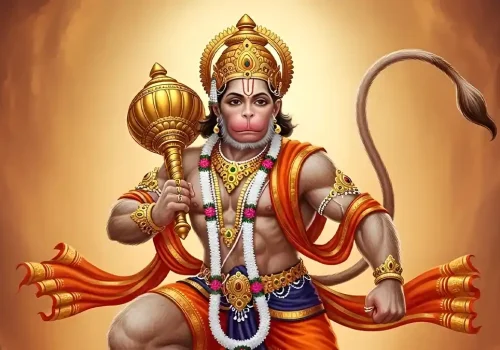
shri-ram-janki-lyrics-mukti-mantra-hanuman-ji-photos

Shri Ram Janki Lyrics in Hindi

नहीं चलाओ बाण व्यंग के ऐह विभीषण
ताना ना सेह पाऊं, क्यों तोड़ी है यह माला,
तुझे ए लंकापति बतलाऊं
मुझ में भी है तुझ में भी है, सब में है समझाऊं
ऐ लंका पति विभीषण ले देख मैं तुझ को आज दिखाऊं

– जय श्री राम –

श्री राम जानकी बैठे हैं मेरे सीने में,
देख लो मेरे मन के नागिनें में,
श्री राम जानकी बैठे हैं मेरे सीने में ॥

मुझ को कीर्ति न वैभव न यश चाहिए,
राम के नाम का मुझ को रस चाहिए।
सुख मिले ऐसे अमृत को पीने में,
श्री राम जानकी बैठे हैं मेरे सीने में॥

राम रसिया हूँ मैं, राम सुमिरन करू,
सिया राम का सदा ही मै चिंतन करू।
अनमोल कोई भी चीज मेरे काम की नहीं
दिखती अगर उसमे छवि सिया राम की नहीं।
सच्चा आंनंद है ऐसे जीने में श्री राम,
श्री राम जानकी बैठे हैं मेरे सीने में॥

फाड़ सीना हैं सब को यह दिखला दिया,
भक्ति में हैं मस्ती बेधड़क दिखला दिया।
कोई मस्ती ना सागर मीने में,
श्री राम जानकी बैठे हैं मेरे सीने में॥

Shri Ram Janki Lyrics in English

Nahi chalao baan vyang ke ai Vibhishan,
Tana na seh paaun, kyon todi hai yeh mala,
Tujhe ae Lankapati batlaaun,
Mujh mein bhi hai, tujh mein bhi hai, sab mein hai samjhaun,
Ae Lankapati Vibhishan, le dekh main tujhko aaj dikhaun.

– Jai Shri Ram –

Shri Ram Janki baithe hain mere seene mein,
Dekh lo mere mann ke naagine mein.
Mujhko kirti na vaibhav na yash chahiye,
Ram ke naam ka mujhko ras chahiye.
Sukh mile aise amrit ko peene mein,
Shri Ram Janki baithe hai mere seene mein.

Anmol koi bhi cheez mere kaam ki nahi,
Dikhti agar usmein chhavi Siya Ram ki nahi.
Ram rasiya hoon main, Ram sumiran karu,
Siya Ram ka sada hi main chintan karu.
Saccha aanand hai aise jeene mein Shri Ram,
Shri Ram Janki baithe hai mere seene mein.

Phaad seena hai sabko yeh dikhla diya,
Bhakti mein hai masti bedhadak dikhla diya.
Koi masti na saagar meene mein,
Shri Ram Janki baithe hai mere seene mein.

Written by: Traditional / Pappu Bedhadak

Presented By: Mukti Mantra

The Origin of the Shri Ram Janki Lyrics

During Shri Ram’s Rajyabhishek, Maa Sita lovingly gifted a pearl mala to Hanuman Ji as a symbol of affection and gratitude. Hanuman accepted the gift with respect but then began to break each pearl with his teeth and inspect them. When asked by assembly members why he was disrespecting such a valuable gift from Sita Mata by doing so, Hanuman explained that he was checking if the pearls contained the name or presence of Shree Ram.

He stated that everything, no matter how valuable, is useless to him if it does not contain the essence of Lord Rama. This moment is reflected in the lyrics of Shri Ram Janki in the line “Anmol koi bhi cheez mere kaam ki nahi, dikhti agar usme chhavi Siya Ram ki nahi.”

At this point, Vibhishan questioned Hanuman with stubble disbelief, suggesting that Ram can’t reside within someone’s body. This mockery finds its expression in the very first line of Shri Ram Janki Lyrics “Nahi chalao baan vyang ke ai Vibhishan….”.

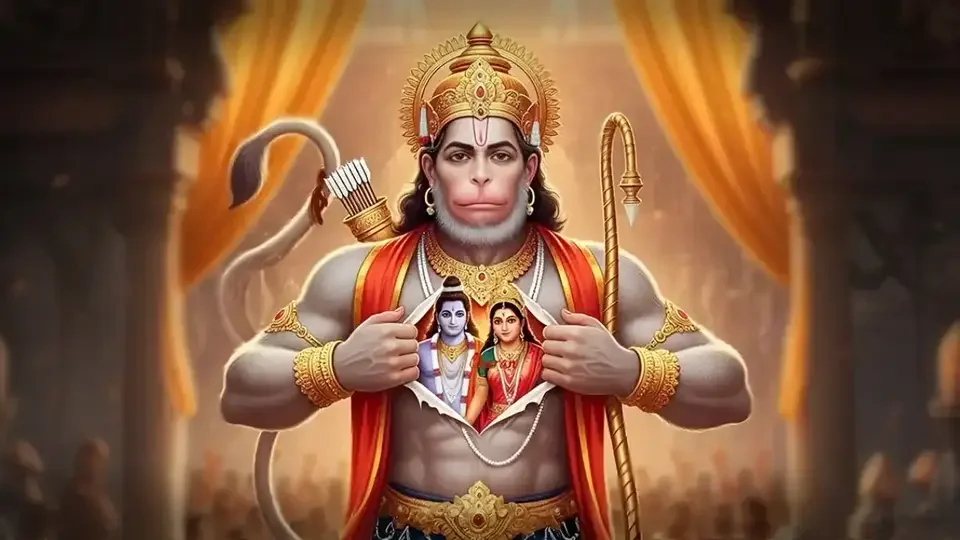
Hanuman tore open his chest, revealing the images of Rama and Sita residing in his heart, demonstrating his supreme devotion (bhakti).

This incident is mentioned in Krittivasa Ramayana, the 15th-century Bengali version of Ramayana, though it is not found in the original Valmiki Ramayana; it is prominently discussed in spiritual discourses, such as those by Swami Sivananda and Sathya Sai Baba, to illustrate the concept of supreme devotion.

Meaning and Essence of Shri Ram Janki Lyrics

The bhajan “Shri Ram Janki baithe hain mere seene mein” is not only a poetic expression of devotion but rather a testimony of Hanuman Ji’s bhakti bhav. The Shri Ram Janki lyrics are rooted in the sacred moment of Shri Ram’s Rajyaabhishek. It carries the eternal message of Nishkam Bhakti, inner surrender and the truth that Shri Ram and Mata Sita reside inside every being. Every line reflects Hanuman Ji’s innocence and his unwavering belief that Ram is not searched outside, but realised within.

The Universal Presence of Shri Ram

In the Shree Ram Janki lyrics, when Hanuman Ji says, “Mujh mein bhi hai, tujh mein bhi hai, sab mein hai samjhaun,” he speaks a profound spiritual truth. Lord Rama is not limited to palaces, temples, or forms; he exists within every being, waiting to be realised through love and surrender. In fact, this presence within every being is not limited to Shree Ram; the same Divine exists within all beings, manifesting as Shiva, Krishna, Maa Durga, or in whatever form a devotee seeks and realises Him.

This line in Shree Ram Janki bhajan lyrics reflects the essence of Sanata Philosophy, where the divine permeates all creation. Here, Hanuman Ji does not claim Rama as his personal possession; instead, he reveals him as Sarvavyapak, the one who is present everywhere. Instead of being arrogant about his achievements, power, and knowledge, Hanuman calls himself a servant of Shree Ram. His humility shines here, as he positions himself not above others, but as a servant trying to help others understand the same truth.

“Shri Ram Janki Baithe Hain Mere Seene Mein” – The Heart as Ayodhya

The refrain “Shri Ram Janki baithe hain mere seene mein” is the soul of the bhajan. Hanuman Ji declares that his heart has become Ayodhya itself, the sacred place where Shree Ram and Maa Sita reside eternally. This is not mere imagination or symbolism alone; it is the outcome of complete surrender. Ram does not visit Hanuman occasionally; he resides in his heart.

The Shree Ram Janki Lyrics further say, “Dekho mere mann ke nageene mein,” inviting the listener inward. Hanuman Ji invites the world to look not at his physical strength or heroic deeds, but at the core of his inner being. The “mann ka nageena” is the purified heart, polished by naam-simran, seva, and humility.

Hanuman Ji teaches that when the heart is cleansed of ahankar (ego), vasna (desire), and bhay (fear), it naturally becomes worthy of the divine. In this state, devotion is no longer an action; it becomes one’s very nature, just like Hanuman.

Nishkam Bhakti – Devotion Without Desire

Hanuman Ji’s bhakti rests on the foundation of Nishkam Bhav, a devotion free from desire and expectation. This truth is beautifully expressed through the line: “Mujh ko keerti na vaibhav na yash chahiye.” Through these words, Hanuman Ji declares that he neither seeks fame nor recognition, nor wealth or status. He does not worship Rama to gain anything in return; he worships Rama because that is his very nature.

His only longing is further revealed in the line “Ram ke naam ka mujh ko ras chahiye.” Here, “Ram nam ka ras” refers to the constant remembrance and chanting of Shree Rama’s name. This line is a profound teaching to the devotees: true bhakti does not depend on material offerings, elaborate rituals, or outward displays of worship. What matters is sincere naam-simiran, carried out with love and surrender.

Through this expression, Hanuman Ji also draws a quiet contrast between spiritual upliftment and worldly satisfaction. While others seek joy in possession, achievements, or praises, Hanuman Ji finds complete contentment in the remembrance of Ram. The peace and fulfilment he experiences through Ram’s name surpass all material pleasures, making every external desire insignificant.

The Shree Ram Janki lyrics further describe this inner joy in the line “Sukh mile aise amrit ko peene mein.” Here, the bliss of chanting Shree Ram’s name is compared to drinking Amrit, the nectar of immortality. Just as amrit grants life and purity, Ram naam sustains the devotees’ spirit, cleanses the heart, and offers eternal peace.

Seeing Siya-Ram in Everything

Hanuman Ji’s devotion does not remain confined to prayer or worship. Through Bhakti, his vision becomes purified, and he begins to measure the worth of everything by one uncompromising standard, whether it carries the presence or reflection of Siya-Ram. The line “Anmol koi bhi cheez mere kaam ki nahi, dikhti agar usme chhavi Siya Ram ki nahi” in Shree Ram Janki lyrics highlights this inner transformation.

Here, Hanuman Ji makes a clear declaration that even the most precious and rare objects hold no value to him if they do not remind him of Shree Ram and Mata Sita. This line in lyrics of Shri Ram Janki also reveals a deeper spiritual discipline. Hanuman ji’s mind stays anchored at Siya-ram at all times by refusing to attach value to anything devoid of their presence.

Through this line, the Shree Ram Janki bhajan lyrics teach that devotion is not limited to singing or chanting; it is a way of seeing. When the heart learns to recognise Siya-Ram everywhere, attachment loosens, and dissatisfaction fades. Hanuman Ji does not reject the world; he redefines its value through devotion. Hanuman Ji’s vision shows that true wealth lies not in accumulation but in constant remembrance.

The Ultimate Proof – Tearing Open the Chest

When reasoning, explanation and words failed to convince, Hanuman Ji chose truth itself as his response. Faced with Vibhishan’s doubt, Hanuman Ji did not try to argue or defend; instead, he allowed his bhakti to speak directly. With complete and fearless surrender, he tore open his chest, revealing the living image of Shri Ram and Mata Sita. Lyrics of Shri Ram Janki highlight this divine moment in the line “Faad seena hai sab ko yeh dikhla diya.”

This act was not an exhibition of power, but the purest expression of devotion. Hanuman Ji showed us that bhakti lives through action, not words. This act also reveals a deeper spiritual truth: true bhakti leaves no room for fear. Hanuman Ji did not hesitate, nor did he consider the consequences. His body held no importance compared to the truthfulness of his devotion.

The Shri Ram Janki bhajan further captures the inner state behind this act through the line: “Bhakti mein hai masti, bedhadak dikhla diya.” Here, “masti” does not refer to excitement or emotion, but to a deep, fearless spiritual joy. This joy arises when the ego dissolves, leaving devotion as the sole remaining presence. His dedication is uncalculated and free from hesitation, bedhadak, because it is rooted in truth.

The final line in Shree Ram Janki Bhajan, “Koi masti na saagar meene mein,” Hanuman Ji declares that no pleasure found in oceans, wealth or worldly abundance can compare to the bliss of devotion. This is not a rejection of the world but a clear recognition of where true fulfilment lies.

Final Thoughts

The “Shri Ram Janki Lyrics” is a sacred window into Hanuman Ji’s heart, where devotion reaches its highest form. It reminds us that Ram does not dwell in external grandeur, but rather in hearts filled with humility, love, and remembrance. The Shri Ram Janki bhajan lyrics teach us that the ultimate purpose of life is not achievement but presence, the presence of Siya-Ram within.

When devotion becomes selfless, fearless, and constant, the heart itself becomes a temple. Where the Bhakti Bhav, as pure as that of Hanuman, Shri Ram Janki eternally resides.

Jai Shree Ram

Know more about Shri Ram Janki Lyrics

Here are some common questions people often ask after reading Shri Ram Janki Lyrics

In the Ramayana, Janki is another name for Goddess Sita, the revered wife of Lord Rama, symbolising purity, devotion, and resilience; the name means "daughter of Janaka," as she was found and raised by King Janaka of Mithila, and she is also considered an avatar of Goddess Lakshmi.

Sita is called Janaki because she's the adopted daughter of King Janaka, the ruler of Mithila, making "Janaki" mean "daughter of Janaka" in Sanskrit.

The name Ram is powerful in Hinduism because it signifies joy, embodies divine energies (sun, fire, moon), represents the ideal of righteousness (Dharma), and is considered a potent mantra that purifies sins, dispels ignorance, and grants liberation, with stories showing its power even surpassing the Lord himself, as it's believed to be greater than chanting the entire Vishnu Sahasranama.

Shri Ram's full name is Shri Ramchandra, though he is also known as Maryada Purushottam Shri Ram, Dasharathi (son of Dasharatha), and Raghava (descendant of Raghu/Raghu dynasty), with his core divine name being "Rama," signifying bliss, joy, or light.

Janaki Vallabham means "beloved of Janaki," referring to Lord Rama, who was the husband of Goddess Sita, the daughter of King Janak. The name can be divided into "Janaki" (Sita) and "Vallabham" (beloved). It is also used to describe him as the lord or husband of Sita.

Related Posts

  • All Posts
  • Aarti
  • Bhajan
  • Chalisa
  • Stotram
  • Stuti
    •   Back
    • Shiva
    • Hanuman
    • Shri Radha
    • Durga
    • Lakshmi
    •   Back
    • Ganesh Ji
    • Maha Lakshmi
    • Lord Vishnu
    • Durga Maa
    • Shiva
    •   Back
    • Krishna Bhajan
    •   Back
    • Shri Radha
    •   Back
    • Shri Ram
shri-ram-janki-lyrics-mukti-mantra-hanuman-ji-photos

Shri Ram Janki Lyrics: Shri Ram Janki baithe hai mere seene mein, is a deeply devotional composition that expresses unwavering faith...

Load More

End of Content.

Popular Articles

  • All Posts
  • Aarti
  • Bhajan
  • Chalisa
  • Stotram
  • Stuti
    •   Back
    • Shiva
    • Hanuman
    • Shri Radha
    • Durga
    • Lakshmi
    •   Back
    • Ganesh Ji
    • Maha Lakshmi
    • Lord Vishnu
    • Durga Maa
    • Shiva
    •   Back
    • Krishna Bhajan
    •   Back
    • Shri Radha
    •   Back
    • Shri Ram

Upcomming Festivals

  • Govardhan Puja – 1 November 2025
  • Bhai Dooj – 2 November 2025
  • Chhath Puja – 5 November 2025
  • Devutthana Ekadashi – 7 November 2025
  • Tulsi Vivah – 9 November 2025
  • Kartik Purnima / Guru Nanak Jayanti – 14 November 2025
  • Masik Shivratri – 15 November 2025
  • Margashirsha Amavasya – 21 November 2025
  • Mokshada Ekadashi – 1 December 2025
  • Dattatreya Jayanti – 4 December 2025
  • Margashirsha Purnima – 13 December 2025
  • Dhanu Sankranti – 15 December 2025
  • Masik Shivratri – 17 December 2025
  • Vaikuntha Ekadashi – 30 December 2025
  • Pausha Amavasya – 29 December 2025

Aartis

  • All Posts
  • Aarti
  • Bhajan
  • Chalisa
  • Stotram
  • Stuti
    •   Back
    • Shiva
    • Hanuman
    • Shri Radha
    • Durga
    • Lakshmi
    •   Back
    • Ganesh Ji
    • Maha Lakshmi
    • Lord Vishnu
    • Durga Maa
    • Shiva
    •   Back
    • Krishna Bhajan
    •   Back
    • Shri Radha
    •   Back
    • Shri Ram

Stotrams

  • All Posts
  • Aarti
  • Bhajan
  • Chalisa
  • Stotram
  • Stuti
    •   Back
    • Shiva
    • Hanuman
    • Shri Radha
    • Durga
    • Lakshmi
    •   Back
    • Ganesh Ji
    • Maha Lakshmi
    • Lord Vishnu
    • Durga Maa
    • Shiva
    •   Back
    • Krishna Bhajan
    •   Back
    • Shri Radha
    •   Back
    • Shri Ram

Stuti

  • All Posts
  • Aarti
  • Bhajan
  • Chalisa
  • Stotram
  • Stuti
    •   Back
    • Shiva
    • Hanuman
    • Shri Radha
    • Durga
    • Lakshmi
    •   Back
    • Ganesh Ji
    • Maha Lakshmi
    • Lord Vishnu
    • Durga Maa
    • Shiva
    •   Back
    • Krishna Bhajan
    •   Back
    • Shri Radha
    •   Back
    • Shri Ram
Edit Template

We are A devotional space dedicated to preserving sacred chants, Aartis, and spiritual wisdom. Mukti Mantra provides scripturally verified prayers and deeper meanings to guide you on your journey toward inner peace. To ensure the highest level of authenticity, our content is reviewed for scriptural and ritual accuracy by Pandit Rajeev Sharma.

Recent Posts

  • All Posts
  • Aarti
  • Bhajan
  • Chalisa
  • Stotram
  • Stuti
    •   Back
    • Shiva
    • Hanuman
    • Shri Radha
    • Durga
    • Lakshmi
    •   Back
    • Ganesh Ji
    • Maha Lakshmi
    • Lord Vishnu
    • Durga Maa
    • Shiva
    •   Back
    • Krishna Bhajan
    •   Back
    • Shri Radha
    •   Back
    • Shri Ram

Contact Us

© 2025 Mukti Mantra. All rights reserved.

A space to explore and embrace the essence of spirituality. Discover sacred chants, aartis, chalisas, stotrams, bhajans, and festival insights — all in one place. Mukti Mantra is your companion on the journey of devotion, offering wisdom, prayers, and guidance for inner peace.

Recent Posts

  • All Posts
  • Aarti
  • Bhajan
  • Chalisa
  • Stotram
  • Stuti
    •   Back
    • Shiva
    • Hanuman
    • Shri Radha
    • Durga
    • Lakshmi
    •   Back
    • Ganesh Ji
    • Maha Lakshmi
    • Lord Vishnu
    • Durga Maa
    • Shiva
    •   Back
    • Krishna Bhajan
    •   Back
    • Shri Radha
    •   Back
    • Shri Ram

Contact Us

© 2025 Mukti Mantra. All rights reserved.