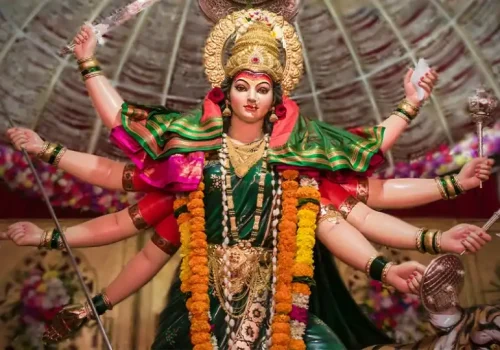
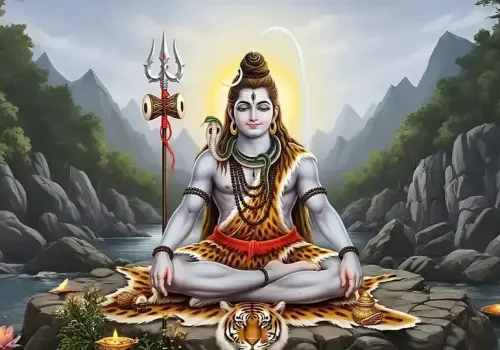
Ganesh Ji Ki Aarti- जय गणेश जय गणेश, जय गणेश देवा । माता जाकी पार्वती, पिता महादेवा ॥ हिंदू धर्म में अत्यंत लोकप्रिय है और हर शुभ कार्य से पहले गाई जाती है। यह आरती भगवान गणेश के स्वरूप, कृपा और विघ्नहर्ता के रूप को दर्शाती है। इसमें Jai Ganesh Jai Ganesh Deva जैसे मधुर बोल हैं, जिन्हें भक्त बड़े प्रेम और भक्ति भाव से गाते हैं। इस आरती के माध्यम से श्रद्धालु विघ्नहर्ता गणपति से जीवन में सुख, समृद्धि और सफलता की कामना करते हैं।
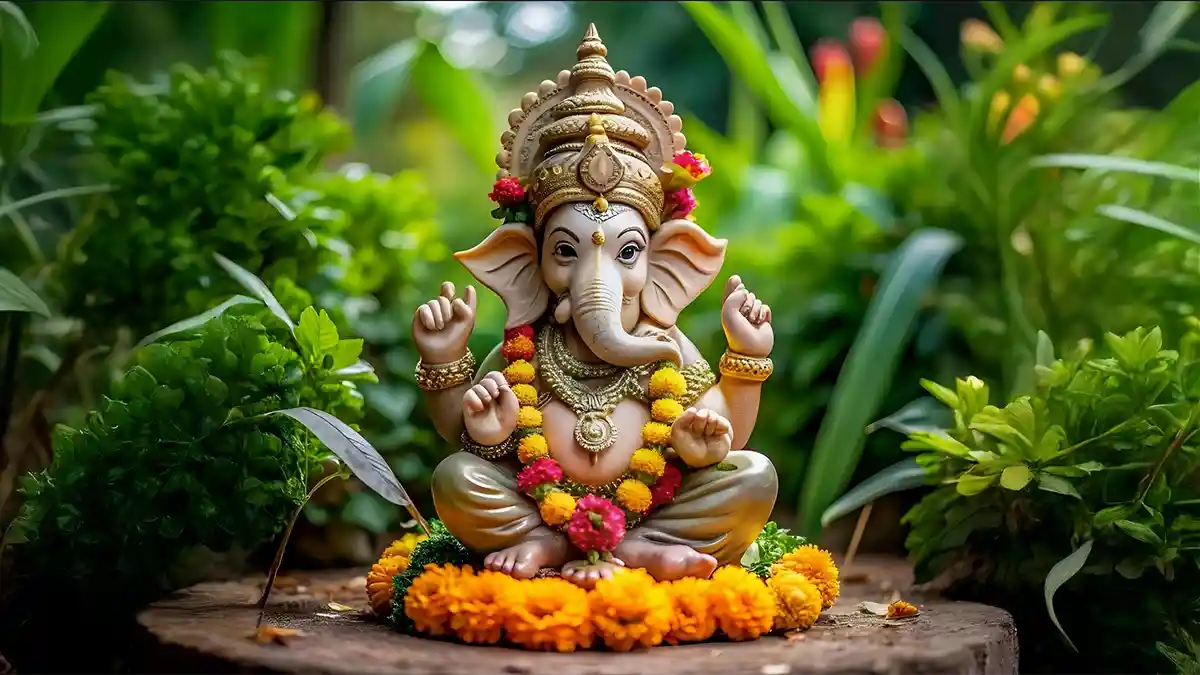
Aarti Ganesh Ji Ki – Jai Ganesh Jai Ganesh Deva lyrics
Prathana:
जय जय गणेश जी, काटो कलेश जी,
मन का मेरा स्मरण कर दो महेश जी।
Ganesh Ji ki Aarti :
जय गणेश जय गणेश, जय गणेश देवा ।
माता जाकी पार्वती, पिता महादेवा ॥
एक दंत दयावंत, चार भुजा धारी ।
माथे सिंदूर सोहे, मूसे की सवारी ॥
जय गणेश जय गणेश, जय गणेश देवा ।
माता जाकी पार्वती, पिता महादेवा ॥
पान चढ़े फल चढ़े, और चढ़े मेवा ।
लड्डुअन का भोग लगे, संत करें सेवा ॥
जय गणेश जय गणेश, जय गणेश देवा ।
माता जाकी पार्वती, पिता महादेवा ॥
अंधन को आंख देत, कोढ़िन को काया ।
बांझन को पुत्र देत, निर्धन को माया ॥
जय गणेश जय गणेश, जय गणेश देवा ।
माता जाकी पार्वती, पिता महादेवा ॥
‘सूर’ श्याम शरण आए, सफल कीजे सेवा ।
माता जाकी पार्वती, पिता महादेवा ॥
जय गणेश जय गणेश, जय गणेश देवा ।
माता जाकी पार्वती, पिता महादेवा ॥
दीनन की लाज रखो, शंभु सुतकारी ।
कामना को पूर्ण करो, जाऊं बलिहारी ॥
जय गणेश जय गणेश, जय गणेश देवा ।
माता जाकी पार्वती, पिता महादेवा ॥
गणपति बप्पा मोरया, नमः पार्वती-पते हर हर महादेव।
Written by: Samarth Ramdas
Presented By: Mukti Mantra
Meaning of Prathana said before starting Ganesh Ji ki Aarti
Starting the Aarti of Ganesh Ji by saying “Jai Jai Ganesh Ji Kato Kalesh Ji, Man ka mera simran kardo Mahesh ji” is a prayer to Lord Ganesha to remove the obstacles and give clarity. Here, Kalesh refers to a state of trouble, sorrow or distress in which the devotee currently is. The devotee is asking Ganesha to end all his worries and troubles when he says “kato kalesh ji”. It also highlights Ganesha in his role as Vighanharta, the one who clears the path so that our actions become fruitful and our minds become peaceful.
After asking him to remove our troubles, the devotee further asks him to guide their minds toward divine remembrance. It expresses that as human minds are often distracted, the devotee seeks Shiva’s grace to keep their thoughts pure, focused, and connected to him. It’s a request for inner peace, devotion, and spiritual alignment, asking Shiva to take over the mind and fill it with his presence.
Read The Meaning of Ganesha Aarti - Jai Ganesh Jai Ganesh Deva
Ganesh Ji ki Aarti, “Jai Ganesh Jai Ganesh Deva,” is one of the most beloved Ganpati arti recited during festivals or even daily at home and before starting any auspicious tasks. The Ganesh Ji ki Aarti praises Lord Ganesha as the remover of obstacles, the giver of wisdom and the divine child of Goddess Parvati and Lord Shiva.
जय गणेश जय गणेश, जय गणेश देवा । माता जाकी पार्वती, पिता महादेवा ॥
Jai Ganesh Jai Ganesh, Jai Ganesh Deva, Mata Jaki Parvati, Pita Mahadeva
The opening verse of Ganesh Ji Ki Aarti refers Ganesh as the great son of Goddess Parvati and Lord Shiva. It serves as a reminder to devotees that he embodies the strength of consciousness from Shiva and the compassion of Maa Parvati. When Ganpati arti begins with this line, it invites peace, clarity, and an auspicious start, the very reason why Ganesha is worshipped first, before starting any auspicious task and even before worshipping other deities.
एक दंत दयावंत, चार भुजा धारी । माथे सिंदूर सोहे, मूसे की सवारी ॥
Ek Dant Dayavant, Chaar Bhuja Dhaari, Mathe Sindoor Sohe, Moose Ki Sawari
This verse in Ganpati Arti describes his divine look. He is called “Ek dant”, meaning the one who has one tooth (tusk here), his one Tusk teaches devotees to hold onto truth and let go of what no longer serves spiritual growth. His four arms represent the four Purusharthas: dharma, artha, kama, and moksha, indicating his control over these and his ability to guide humans at every stage of life.
पान चढ़े फल चढ़े, और चढ़े मेवा । लड्डुअन का भोग लगे, संत करें सेवा ॥
Paan Chhade, Phal Chhade, Aur Chhade Mewa, Laddooan Ka Bhog Lage, Sant Karen Seva
Here, various offerings such as paan, fruits, dry fruits and laddus, that he loves are described. These offerings represent the purity and sweetness of the devotee’s mind and one’s wish to surrender to the divine. It is further stated that even the greatest saints worship him with humility, demonstrating that service (seva), even when expressed through small actions, holds great spiritual value and can strengthen the connection between devotee and deity.
अंधन को आंख देत, कोढ़िन को काया । बांझन को पुत्र देत, निर्धन को माया ॥
Andhan Ko Aankh Det, Kodhin Ko Kaya, Banjhan Ko Putra Det, Nirdhan Ko Maya
While on the surface this verse in Ganesh Ji ki Aarti praises Lord Ganesha for granting eyesight, healing the sick, blessing the childless, and giving wealth to the poor, on a spiritual level, giving sight to the blind refers to awakening wisdom in the ignorant, helping them see truth beyond illusion and helping in gaining a deeper and more focused understanding of life and overcoming ignorance. “Healing the sick” reflects the restoration of inner balance and peace. “Blessing the childless” means new beginnings, creativity and birth of fresh ideas. At last, “Maya to the poor” refers to more than just money; it refers to the prosperity of mind, opportunities and clarity. Ganesh is the giver of Budhi (intelligence), and this verse reveals His power to transform a devotee.
‘सूर’ श्याम शरण आए, सफल कीजे सेवा । माता जाकी पार्वती, पिता महादेवा ॥
‘Soor’ Shyam Sharan Aaye, Safal Keeje Seva
In this verse, the poet Shyam bows to Ganesha and asks him to accept his devotion. This represents pure emotion of surrender, a moment where ego meets and only love remains. When the devotee sings this part of the Ganpati aarti sincerely, it means a desire for meaningful service and guidance on the spiritual path.
दीनन की लाज रखो, शंभु सुतकारी । कामना को पूर्ण करो, जाऊं बलिहारी ॥
Deenan Ki Laaj Rakho, Shambhu Sut Kaari, Kamna Ko Poorn Karo, Jaau Balihari
In the concluding verse of Jai Ganesh Jai Ganesh Deva lyrics, devotees seek protection and the fulfilment of their wishes. Ganesha, as the son of Lord Shiva (Shambu), stands as a guardian of devotees who come with humility. They are asking him to protect their dignity, remove obstacles from their lives and fulfil righteous wishes.
जय गणेश जय गणेश, जय गणेश देवा । माता जाकी पार्वती, पिता महादेवा ॥
Jai Ganesh Jai Ganesh, Jai Ganesh Deva, Mata Jaki Parvati, Pita Mahadeva
The Ganesh Aarti ends by again repeating the first verse of the aarti, “jai ganesh jai ganesh deva…” This aarti teaches us that Ganesha is not only the remover of obstacles but also the master of the mind, the giver of wisdom, and the source of both material and spiritual wealth. It guides the devotees to embody clarity, discipline, devotion and humility. This Ganpati Arti transforms a simple chant into a spiritual journey, helping the devotee align with divine energy and move forward with strength and purity.
Know more about Ganesh Ji
Here are some common questions people often ask about Ganesh Ji after reading Ganesh Ji ki Aarti
Ganesh Chaturti is celebrated because it marks the annual return of Lord Ganesha to visit his devotees, a tradition believed to have started due to the great devotion of Morya Gosavi in Maharashtra. Although it is often believed that Ganesh Chaturti is celebrated as the birth of Lord Ganesh, that is not true.
In Maharashtra, there was a village named Morgaon where a community devoted to the worship of Ganesha lived. Among them was a very renowned saint and devoted follower of Lord Ganesha, Morya Gosavi. It is believed that Ganpati was so loved by Morya Gosavi and others that one day Ganesh ji took leave from Kailash to come meet them. He also blessed Morya Gosavi with a boon that even after his death, his name would always be taken along with Ganesh ji’s name, which is why we say “Ganpati Bappa Morya.”
But after meeting all these people, Ganpati Bappa became so attached to them that in the end, Maa Parvati herself had to come to take him back. She told him that every year she would allow him to go and stay with them for a particular period, but now was the time to return. This also marked the beginning of the Gauri Ganpati tradition.
Ganesha’s trunk can curve either to the left or the right, and each has a different meaning. A left-curving trunk, known as Vamamukhi, aligns with the Ida Nadi, the calming and cooling energy, making it ideal for homes. It is believed to bring peace, harmony, and prosperity, and it is easier for daily worship. In contrast, a right-curving trunk, known as Dakshinamukhi, is associated with the Pingala Nadi, which represents strong solar energy. It is seen as very powerful and is mostly found in temples, as it requires more strict and disciplined rituals for worship.
Ganesh is worshipped before starting any auspicious or important task because he represents Buddhi - the power of clear thinking, wise judgement. He is the Vighnaharta (Remover of Obstacles), a designation he earned by circling his parents, symbolising that they were his universe.
The Story of how he became Pratham Pujniya is interesting. One day, all the devas argued about who should be honoured first and went to Lord Shiva. Shiv ji suggested a race. He said that whoever completed three rounds of the universe first would win. Everyone set off on their vahans and began circling the universe. However, Ganesh ji took three rounds of Lord Shiva and Mata Parvati instead. When asked why, he explained that his parents were his universe. Moved by Ganesha's devotion, intelligence, and cleverness, he was declared the winner and came to be known as Pratham Pujya Ganesha.
The well-known aarti “Jai Ganesh, Jai Ganesh, Jai Ganesh Deva” is traditionally attributed to Shri Ramji from Chiplun, Maharashtra. He wrote it in the 19th century. Since then, it has become one of the most sung Ganesha aartis in India.
To perform Ganesh Ji Ki Aarti at home, you don’t need a lot of fancy things; simple devotion is enough.
- First, clean the space. Then, place Lord Ganesha’s idol or photo on a clean cloth or small altar.
- Offer flowers, incense, a diya (lamp), and sweets like modaks or laddoos, which are Ganesha’s favourites.
- Light the diya and ring a bell, if you have one, to start the ritual.
- Chant or play Ganesh Aarti, like “Jai Ganesh Jai Ganesh Deva,” with devotion. You can clap or use a small aarti plate with a diya while singing.
- End with a prayer. Bow down and ask Lord Ganesha to remove obstacles and bless your home.
The most important part is sincerity and faith, not how complex the ritual is.
Ganesh Chaturthi is an ancient tradition celebrated as the time when Lord Ganesha comes down to visit his devotees, but it was famously transformed into a grand public festival in 1893 by Bal Gangadhar Tilak in Maharashtra to unite people against British rule.
Why is Ganesh Chaturti celebrated?
Related Posts
- All Posts
- Aarti
- ashtakam
- Bhajan
- Chalisa
- Hanuman Chalisa
- Stotram
- Stuti
- Back
- Shiva
- Hanuman
- Shri Radha
- Durga
- Lakshmi
- Back
- Ganesh Ji
- Maha Lakshmi
- Lord Vishnu
- Durga Maa
- Shiva
- Back
- Krishna Bhajan
- Back
- Shri Radha
- Back
- Shri Ram
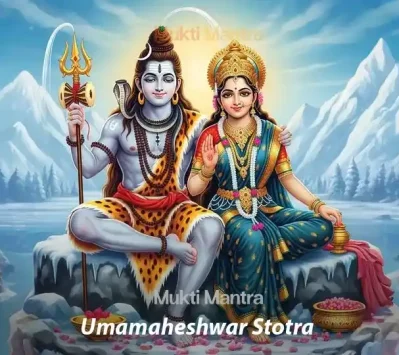
Umamaheshwar Stotra Lyrics | श्री उमा महेश्वर स्तोत्रं: नमः शिवाभ्यां नवयौवनाभ्यां परस्पराश्लिष्टवपुर्धराभ्याम् । नगेन्द्रकन्यावृषकेतनाभ्यां नमो नमः शङ्करपार्वतीभ्याम् ॥ Read full...
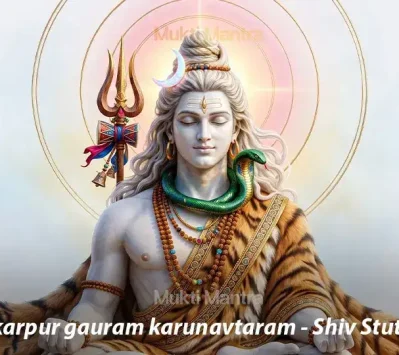
Karpur Gauram Karunavtaram Lyrics: Karpura-Gauram Karunavataram Samsara-Saram Bhujagendra-Haram || Read full Mantra with its word-by-word meaning below: Karpur Gauram Karunavtaram...
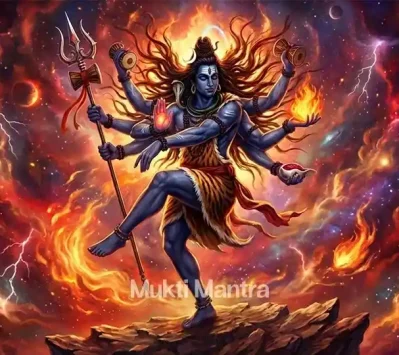
Shiv Tandav Stotram Lyrics in English: Jatāṭavī-gala-jjala-pravāha-pāvita-sthale Gale’valambya lambitāṃ | It is one of the most powerful and visually striking...